Now is the time to start fireworks training!
March 31, 2026
Fireworks are an exciting part of many celebrations, but for dogs they can be frightening and overwhelming. Loud, unpredictable noises and flashing lights are very different from anything a puppy would naturally encounter. The good news is that with early, gentle desensitisation, many puppies can learn to cope far better with fireworks as they grow.
Why early desensitisation matters
Puppies go through important learning stages during their first months of life. Experiences during this time can shape how they respond to new situations later on. If a puppy’s first exposure to fireworks is sudden and frightening, this can increase the risk of long‑term noise sensitivity or fear. Introducing firework sounds in a calm, controlled way helps puppies build confidence and resilience before the “fireworks season” arrives.
What is desensitisation?
Desensitisation involves gradually exposing a puppy to a stimulus at a very low level, increasing it slowly while ensuring the puppy remains relaxed. When done correctly, the puppy learns that the sound is not something to fear.
For fireworks, this often means starting with recorded firework noises (The Dogs Trust have some free downloadable sounds on their website here) played quietly at home, paired with positive experiences such as playtime, treats, or gentle interactions. Over time, the volume can be increased very gradually, always staying within the puppy’s comfort zone.
Making it a positive experience
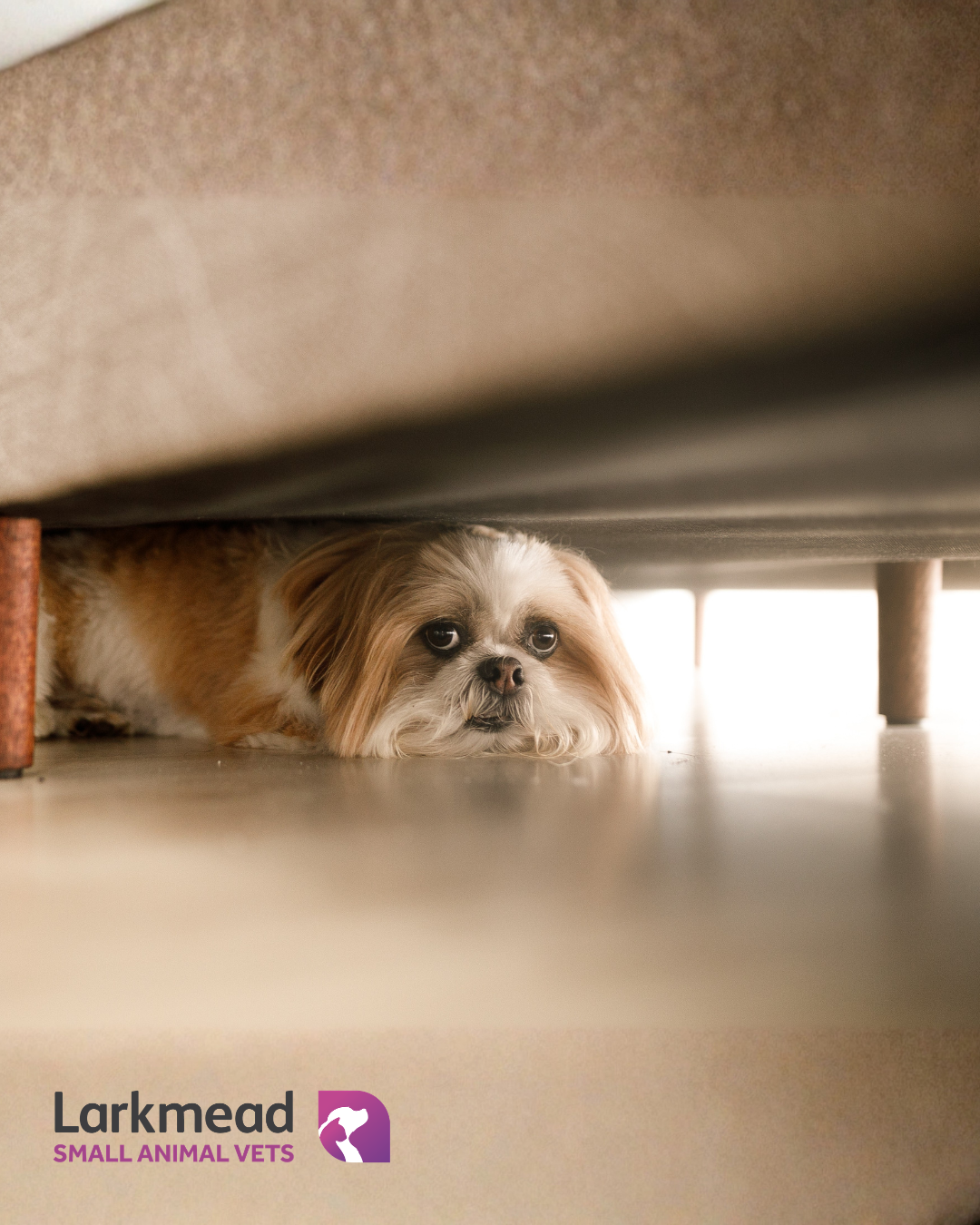
The key to successful desensitisation is keeping things positive and pressure‑free. Puppies should never be forced to “face their fears”. If a puppy appears worried — for example, freezing, trembling, or trying to hide — the sound level should be reduced and only increased again, once the puppy is happy.
Here are our top tips:
- Keep sessions short and relaxed
- Allow puppies to move away if they choose
- Reward calm behaviour with praise or treats
- Stay calm yourself, as puppies take cues from their owners
Consistency is more important than speed. Slow progress is far more effective than trying to rush – and this is why we recommend you start now, perhaps with weekly sessions so when the ‘season’ starts your pup won’t feel it is out of the ordinary.
Our advice to puppy owners
Desensitising puppies to fireworks is an investment in their long‑term wellbeing. Starting early, going slowly, and keeping experiences positive can help prevent fear responses from developing later in life!
If you would like support, please give us a call on 01235 814991 / 01491 651379 / 01235 633820.