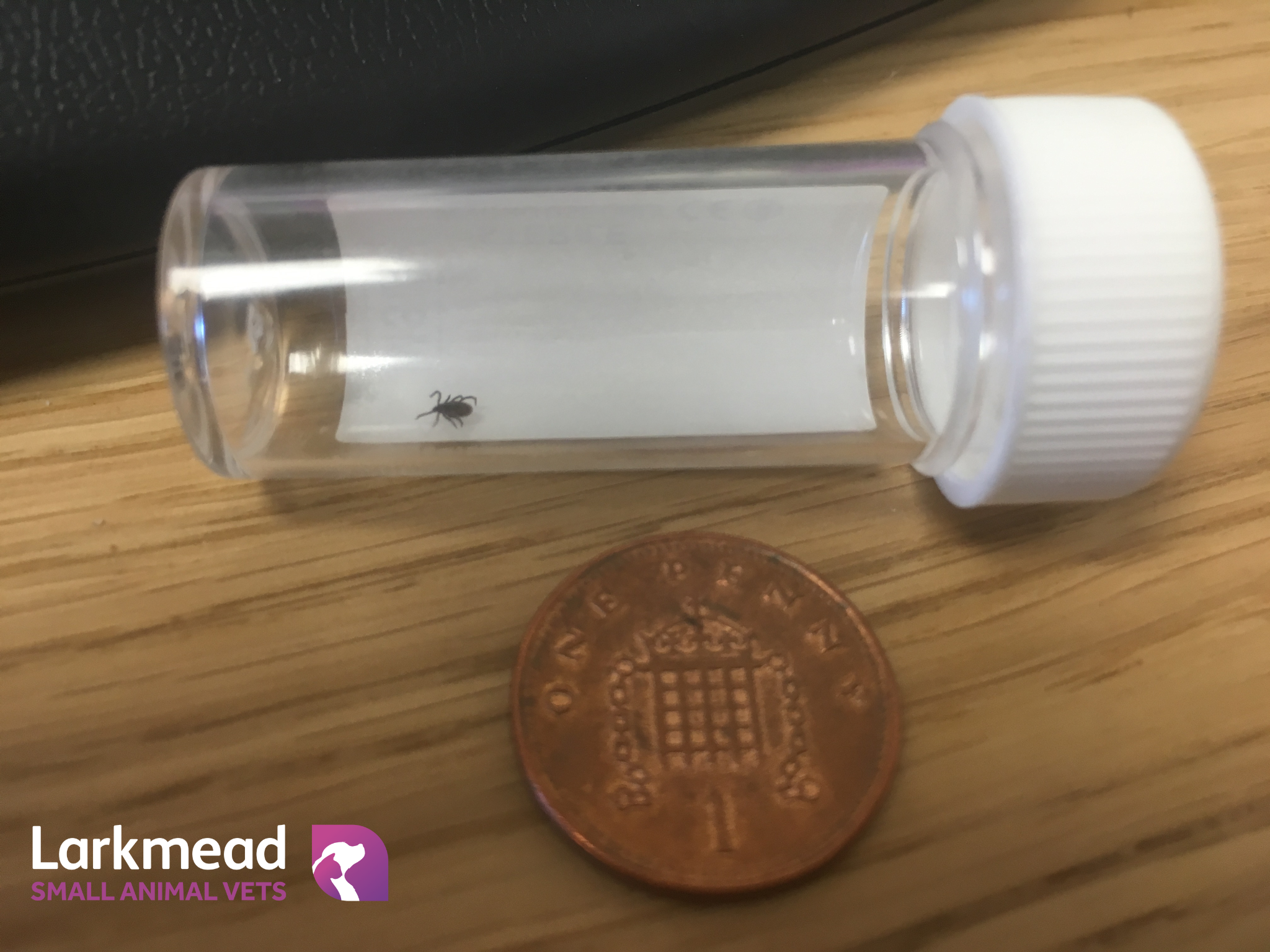
It’s Tick Season!
May 22, 2025
As warmer months settle in across the UK, so does the increased risk of ticks. These tiny parasites might seem insignificant, but they can pose serious health threats to our pets—and even to humans.
Why Are Ticks a Problem?
Ticks are blood-sucking parasites that latch onto mammals, birds, and sometimes reptiles. In the UK, the most common species include the sheep tick (Ixodes ricinus), hedgehog tick (Ixodes hexagonus), and the brown dog tick (Rhipicephalus sanguineus), with some now becoming more common due to warmer climates and increased pet travel.
Ticks are more than just a painful nuisance. They are known carriers of harmful diseases such as:
- Lyme disease – caused by the Borrelia bacteria, this can affect both pets and humans, leading to joint pain, lethargy, fever, and in some cases, neurological issues.
- Canine babesiosis – a tick-borne disease now present in some parts of the UK, it can cause fever, anaemia, and in severe cases, death.
Where Are Ticks Found?
Ticks are commonly found in grassy, wooded, or overgrown areas. However, urban parks, gardens, and even long grass in gardens can harbour them, particularly if wildlife visit. Pets who love exploring outdoors are at higher risk—particularly dogs, but cats too.
What Can You Do to Protect Your Pet?
- Check your pet regularly – especially after walks in high-risk areas. Pay close attention to the head, ears, ‘armpits’, neck, and feet.
- Use a tick prevention product – from spot-on treatments to collars and oral tablets, we can advise on the best solution for your pet. The majority of these products are available with your Lifetime Care Club membership.
- Stay up to date with parasite control – prevention is far easier (and cheaper) than treatment.
- Remove ticks safely – never use fingers or tweezers. Instead, use a tick removal tool, grasping the tick as close to the skin as possible and gently twisting it out. This ensures that no part of the tick is left behind to cause an infection. Vet Liz shows us how here.
If you’re unsure how to remove a tick, want advice on prevention, or notice any unusual symptoms in your pet, please give us a call.