Hypertension in cats

Hypertension is very common in cats over 7 years old, and can lead to sudden onset blindness, heart disease, or seizures. It can be a complicating factor in chronic kidney disease, hyperthyroidism, diabetes, other hormonal conditions, and some tumours.
Recently updated guidelines for routine preventative healthcare recommends annual blood pressure checks for cats over 7 years old and therefore, at Larkmead, we are moving to make this part of our routine recommendations as your cat reaches his or her senior years.
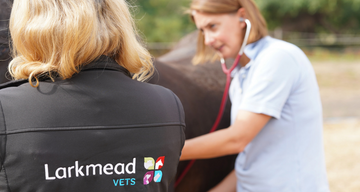
Taking blood pressure measurements is simple and painless, very similar to when we have the cuff on our arm at the doctors. The hardest part is ensuring your cat feels comfortable and therefore the reading is accurate and not a reflection of the stress of coming to the vet!
Over the coming weeks, we are inviting all cats over 7 years old to come in for a free blood pressure check. This will allow us to gather a baseline reading to track in future years and hopefully identify issues before they become problems!
Once you receive your invitation, you can book online – currently clinics are only available at Great Western Park and Cholsey and it is important that you select the appointment type ‘Blood Pressure Check’ (otherwise the right equipment might not be available for the vet!).
We recommend arriving 5-10 mins early for your appointment to allow your cat to destress from the journey.
If practical, bring their bed or a blanket/pillow that is familiar from home.
Once in the consult room, the vet will allow your cat to exit the carrier in their own time and to explore the room.
Once settled, the vet may ask you the vet may ask you to hold and reassure your pet whilst they apply the cuff (either on the forelimb or tail). We don’t usually need to trim any fur but may need to do so on occasion.
Occasionally cats can experience ‘white coat syndrome’, in which case, readings may not be accurate. You may be given a prescription for a mild dose of an anxiety reducing sedative and asked to return at a later date.
If your cat is happy enough, the vet will try to take a few readings a get the average to record on your cats record. If any anomalies are found, the vet will discuss with you.
All being well, there will be no further checks needed at this stage and you will receive a reminder next year to revisit.
If you have any questions, please give us a shout!
Free checks are only available until the end of July 2022 for cats over 7 years old.
The value of pet insurance

Unexpected veterinary care can hit us hard – it can be emotional and can be hard on the pocket.
Pet insurance can help when you need it most but, it is important to choose the right insurance as there so many difference ones on the market with so many different clauses.
The most comprehensive option is Cover for Life Policies. They have an annual benefit that is renewed each year and provide continuous cover for long-term or recurring conditions.
Maximum benefit policies usually offer a fixed maximum benefit for each condition. For example, a policy may pay out £6,500 for each illness over your pet’s lifetime. Variations on this type of policy may pay a maximum per year or maximum total for any claim on the policy. The downside of these policies is that some conditions can affect your pet for many years (such as diabetes or skin disease). In these cases, if the maximum benefit is reached, the ongoing costs fall to the owner to pay.
Twelve month policies provide limited cover. A condition is only covered for a maximum of 12 months from the first symptom, not just from the first claim. It can be possible to be excluded from claiming for a condition without ever submitting a claim or even having any treatment
We are not regulated by the FCA and therefore unable to give advice on specific policies but we can outline some of the things to look for and those to avoid! Further information is available here.
Do you dread ‘firework season’?

It is very important to spare a thought for our pets during the next few weeks. The firework season is here again and it is never just confined to one night. When our pets are bothered by fireworks they can respond in different ways – some become loud and obviously aggravated, some cower and tremble whilst others hide away and become withdrawn. The common theme is that they are all displaying a fear or phobia of fireworks.
Another thing to be aware of is that some of our younger pets will never have encountered fireworks before so we cannot predict how they will respond. Older animals who have never been seemingly bothered in the past may now also be worried by them. Each year, therefore, think afresh about the firework season and what it could mean for your pet.
Top tips to help your pet during the firework season:
Before:
- Create a safe place for your pet to be when the fireworks are going off – this may be a ‘den’ made by covering a table or pet crate with blankets, or access to a quiet spot such as under a bed where they can hide. You can use a plug in pheromone therapy 2-3 days before you anticipate the fireworks to start. Plug this in near the safe place and it will send calming messages to your pet. Please ask our team about a special offer on these items if they are of interest.
- If you would normally take your dog out for a late evening walk, try bringing this forward to daylight hours. Do this for a few days before fireworks start to get them in the new routine.
On the night:
- Reduce the noise and light impact – keep doors and windows closed, draw curtains, and put on the radio or television. Classical music can often be relaxing for animals as well as humans. Keep cats indoors with a litter tray if needed.
- Change the focus of your pet’s attention: play with them with a new toy or game, this will distract you as well and hopefully reduce anxiety all round.
Should none of these ideas help, and your pet gets particularly upset, please speak to your vet. We have a range of prescription medications that may be suitable to calm and relieve anxiety.
If your pet is affected by fireworks then you can consider sound therapy for future firework seasons. This therapy aims to desensitise your pet to the unpleasant noises associated with them. For more information please visit the Dog’s Trust website where there is information and downloads available.
Please speak to us if you would like to discuss options.
Rabbit companions

Rabbits are companion animals and in the wild they live in large groups, enjoying plenty of social interaction (and love – you know the expression!)
As pets, they really should be kept in pairs (as a minimum) and mixed sex tends to work best – of course, neutering is recommended if you don’t want your pair to become a fluffle! Neutering can also have health benefits and can prevent tumours in females and aggression in males.
So, if your bunny didn’t come with their some-bunny (generally under 12 weeks of age, they pair up quickly) or has sadly lost them later in life, what do you do? It is not as simple as just buying a new rabbit – they have to bond and this can be a slow process. Many rescue centres have expertise in bonding bunnies so they are a good place to start. If you’re going to do it yourself, be patient . . .
Rabbits can be surprising vicious and so the best place to start is with separate enclosures where they can smell/see each other and this can gradually move closer as they get more accustomed.
Once they seem fairly friendly (and this could take weeks – don’t lose heart), you can try to introduce them – this should be in a neutral space and you must never leave them alone. Keep a thick towel handy in case you need to separate them quickly and intervene at the first sign of tension. Keep repeating this visit, gradually building up the time, until they are relaxed in each others company. Feeding them together can help.
Once they are happily grooming and snuggling together, you can move them in together and let the bunny love begin!
There’s lots of helpful advice on bunny bonding online:
https://rabbitwelfare.co.uk/rabbit-care-advice/ownership/bonding-rabbits
The animal charity Wood Green also runs free e-learning courses for bunny owners: https://woodgreen.org.uk/workshops/rabbit-elearning-course
Lungworm

Lungworm infection in dogs is something we often hear a lot about. It used to be a rare condition – but is on the increase in certain areas of the country. As we are now starting to travel about a bit more after lockdown it is important for you to understand the risks posed by this parasite.
Lungworm (Angiostrongylus vasorum) is an infection caused by a roundworm parasite which is carried by slugs and snails. Dogs become infected when they consume these animals or the trails of slime they leave behind on grass, in puddles, outdoor water bowls or toys that have been left outside in grass. Unlike many diseases, Lungworm cannot be passed from dog to dog. The worm needs slugs and snails to act as a host in order to grow and develop.
Incidents of Lungworm being diagnosed in dogs were originally more prevalent in the South East and in South Wales, but there have been an increasing number of cases in other parts of the country, including Scotland. However it is still a rare diagnosis.
Many dogs won’t initially show symptoms of Lungworm and it can go unnoticed for quite some time as the symptoms can easily be confused with other illnesses.
Dogs may show no signs of disease or may present with coughing or bleeding, which in severe cases can be fatal. Luckily, Lungworm infections in South Oxfordshire are extremely rare – but if you are travelling to other parts of the country, it is important to check that your routine worming treatment prevents against this disease. If the condition is recognised promptly, treatment is effective.
Preventative treatment involves giving monthly prescription worming tablets, or spot-on treatments. Not all worming treatments offer lungworm prevention. So, if you are unsure please contact us for advice. It is also good practice to reduce the chances of your dog contracting lungworm by following simple methods of dog hygiene such as ensuring faeces are picked up promptly and disposed of correctly and not leaving toys or bowls outside for snails/slugs to climb over.
Many over the counter anti-parasitic treatments have poor efficacy so we would recommend a veterinary dispensed treatment. If you’re not already a member, consider joining our Lifetime Care Club to have all of these products included. Your vet can help you choose the best one for your pet based on their lifestyle and habits.
Membership of our Lifetime Care Club includes parasitic treatment – please see here for further details.