Pet Proactive Pet Insurance

We are excited to announce our new partnership with Pet Proactive pet insurance which directly benefits Larkmead customers.
As vets, we see pet insurance as a means for pet owners to budget for the unexpected, and if the worst happens, it enables us to carry out the most effective treatment.
However pet insurance can be frustrating with many terms & conditions or exclusions, meaning claims are often not paid in full which can leave you with an unexpected bill. On top of this our customers regularly complain of hefty price increases as their pet gets older, at the time when they are most likely to need insurance.
We have worked closely with Pet Proactive to create a new type of insurance that provides lifetime cover for treatment and referrals through our practice.
The policies are designed for customers who are happy to commit to using Larkmead as their main veterinary practice. We believe this is a much simpler type of insurance which not only removes the worry of unexpected veterinary bills but will also save money for most of our customers over their pet’s lifetime.
“We are delighted to be working with Larkmead Vets. Larkmead is an exceptional independent veterinary practice that puts the needs of their customers and pets first. This enables us to provide great insurance policies that reflect Larkmead’s in-house capability, fair pricing and gives their veterinary team complete freedom to do what is best.”
Elizabeth Graham, Chief Executive Officer Pet Proactive.
Pet Proactive offer cover from £4,000 to £12,000 per year, and whichever policy you choose comes with the following good to know features:
- Complete medical cover including dental illness*
- Any treatment or referral we prescribe is covered up to your policy limit
- A clear and simple policy which confirms any pre-existing conditions exclusions at the start
- Premiums are based on the fair pricing at Larkmead Vets and Pet Proactive will never increase your premium just because you have made a claim.
- Unlike most policies where you may need to pay an excess per condition per year, with a Pet Proactive policy you only pay one excess per year of £100 irrespective of how many conditions you are claiming for, up to your annual claim limit.
- Larkmead will process your claims upon request so you don’t need to worry about paying the balance to us if you’re insured with Pet Proactive.
- Treatment through another vet practice is included if you are away from home.
Pet Proactive can quickly provide prices for your whole pet family under 6 years of age – you just enter the mobile number or email address you have registered with us on their website and your prices are displayed.
And if you already have pet insurance, Pet Proactive’s free “switch check service” will confirm any pre-existing health conditions that would affect your policy before you buy, so you can have complete certainty of cover for you and your pet.
To take out a policy with Pet Proactive you must be registered with, and commit to your primary care with Larkmead Vets. Your pet must be less than 6 years old when taking out the policy – cover is then provided for life as long as you renew annually.
*as long as your pet does not already have pre-existing dental problems
Find out more
Let’s Talk about Blood Pressure

Hypertension or high blood pressure can affect many older cats without causing obvious clinical signs. Any cat over the age of 7 may be affected. It is more common in cats who suffer from a pre-existing condition such as kidney disease, hyperthyroidism or diabetes, however it also occurs on its own as a primary condition.
If your cat has untreated high blood pressure there may be damage to the eyes, heart, kidneys, brain and nervous system. This can appear as sudden onset blindness, seizures or breathing problems for example. Problems such as these are preventable with early detection and management.
Screening for hypertension is simple and painless and blood pressure measurements are taken using a cuff just like in humans. Owners are welcome to stay with their cats while they are having their check and can often help the vet or nurse by holding them comfortably. A minimum of three readings are usually taken to find an average. If your cat gets particularly stressed during travel, we can arrange for them to stay for a morning to settle down prior to checking.
If the blood pressure reading is found to be high, medication can be started immediately. This is readily accepted by most cats and stabilisation is often achieved in the first few weeks after beginning treatment. Further checks to rule out a cause for the hypertension will be discussed with you and regular follow-ups arranged to make sure your cat is responding well to treatment.
If you would like to book your cat in for a blood pressure check, you can book online (make sure you choose the appointment type ‘blood pressure check’) or give us a call.
We understand that many pets get anxious when coming to the vets so please mention it when booking if you think this applies to yours. We can provide useful tips and anxiety reducing medication if needed to help make their visit as relaxing as possible.
Surgery at Larkmead

The Larkmead team is pretty unique in that we have a lot of skills in-house that other vets may need to refer patients to specialist vets for. This usually means better prices and of course the familiarity and care from the Team at Larkmead, particularly for post-op follow up care.
Several of our vets have undergone post-graduate training in specific disciplines and we are fortunate to have clinicians who are RCVS Advanced Practitioners in both surgery and medicine. This means we can offer treatment for more complicated cases than many other practices.
Comprehensive investigations and treatment are possible for a range of conditions including cardiology, dentistry, internal medicine, emergency and critical care, neurology, oncology, soft tissue and orthopaedic surgery.
In order to provide this service, we continuously re-invest in modern diagnostic aids such as ultrasound scanners, endoscopes, X-ray machines and laboratory equipment to give you accurate rapid results. At Didcot we also have a purpose-built Orthopaedic suite.
Should patients need to stay with us for any period, we have separate dog and cat hospitalisation facilities at both our Didcot Park Road and Cholsey branches. Our own vets and nurses provide 24-hour care for any patient admitted to the practice.
Booking your pet in for surgery can feel worrying but we are happy to answer any questions you may have and will explain what you will need to do before and after their procedure.
Should the vet recommend any procedure for your pet, please feel free to ask any questions (including an estimate of costs) – we want you to feel comfortable with what is going to happen and know that we are going to take good care of them whilst they are an in-patient with us.
How we can help brachycephalic breed dogs

Brachycephalic or ‘flat-faced’ dogs are popular family pets that include Pugs, English Bulldogs and French Bulldogs. If you or someone you know owns a brachycephalic dog, you may have heard talk of Brachycephalic Obstructive Airway Syndrome (BOAS) which refers to the group of conditions resulting from breathing difficulties caused by the short nose and narrow airways of these breeds. Research suggests more than 40% of English bulldogs, 50% of French Bulldogs and 60% of Pugs would benefit from surgery to help treat BOAS and widen their airways.
Short noses mean that the soft tissue that usually sits comfortably inside a dog’s nose and mouth, has to fit into a much smaller space. This results in very narrow airways inside the nose and an over-long soft palate (the roof of the mouth) which can obstruct the back of their throat and causes snoring and snorting sounds commonly heard in these dogs. Other signs of BOAS include difficulty breathing during exercise, poor tolerance to heat, retching/vomiting and sleeping with a toy in their mouth or with their head propped up.
If left untreated, over time, the narrow airways and breathing difficulties can result in secondary respiratory, digestive and heart diseases which further worsens the BOAS. This why early intervention is key to minimising the effects of BOAS and stopping disease progression. Some dogs may only need lifestyle changes to manage their BOAS, such as keeping slim and avoiding hot weather. However more severely affected dogs may require surgery to widen their airways and improve their ability to breathe.
The most accurate way of knowing which dogs would benefit from treatment is by doing a non-invasive respiratory function assessment in which a vet listens to a dog’s breathing sounds before and after an exercise tolerance test. We recommend that all brachycephalic breed dogs have an assessment starting from one year old as if needed, airway surgery can greatly improve their quality of life. The cost of an assessment is the same as a standard veterinary consultation and are free to Lifetime Care Club Gold Members, with 20% off for LCC Kite Members.
Booking an Exercise Tolerance Test is very easy – please give our Reception Team a call. You should allow half an hour for your visit as you will be asked to complete a short-survey upon arrival as well as the 20 minute test itself. Appointments are available at Cholsey, Didcot Park Road or Great Western Park.
Our Video Consultation Service

Did you know that you can see one of our own vets from the comfort of your own home? We even have some evening appointments available at no additional cost to routine hours.
Here at Larkmead we are pleased to offer all clients the opportunity to use our video consulting service. Whilst this is not ideal for every appointment, it is very useful if a hands-on examination of your pet is not essential or in some situations, not possible. Examples of when the video service works well include all routine post-op checks (at days 2 and 10 after surgery), 6 month health checks in healthy pets and any queries when you’re not sure if your pet needs to see a vet or not. As with seeing a vet in the surgery, the video vet will have full access to your pet’s medical history plus any test results.
How does it work?
- Head for the Book A Video Consultation button.
- Choose the appointment that best suits your requirements (ie. consultation or pre/post op check)
- Consultations are free of charge for Lifetime Care Club Gold (LCC) Gold members and pre or post op checks. LCC Lark members receive a 15% discount and Kite members a 25% discount.
- Book your time slot – you can sometimes even find same day appointments available.
- Fill in your details and the reason for your appointment. Be careful to check your email address is correct.
- If your consultation is chargeable, you can pay online and confirm details
After booking you will receive a Zoom link via e-mail. On the day of your appointment make sure you have your pet with you and Zoom downloaded on your device. When you are ready just click on your Zoom link at your allocated appointment time. You will be ‘met’ in the call by one of our vets. If an in-house appointment is deemed necessary, this can be booked for you by the vet at no additional consultation cost.
PLEASE NOTE: Video appointments may not be used for emergencies or repeat prescription checks. If the vet decides that your pet requires prescription medication following the video appointment, then a follow-up consultation will be made at the surgery on your behalf.
We’ve received lots of positive feedback on this convenient service so why not give it a try the next time you need veterinary advice?
Our nurse clinics
Welcome to 2023 – we want to tell you a bit about things at Larkmead that you might not necessarily know we offer.
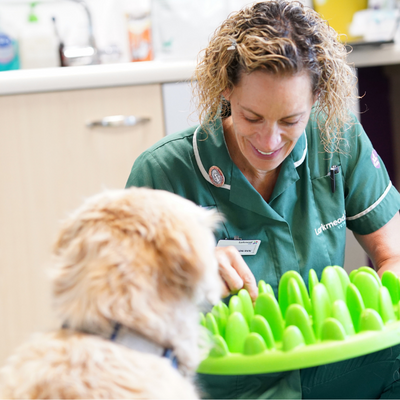
Our wonderful nursing team is an incredibly important part of our practice. Between them our nurses have years of experience, lovingly caring for our patients as well as their own pets. Did you know that as well as keeping things ticking over behind the scenes, they also run their own clinics and appointments?
Clinics are currently held at our Cholsey and Didcot branches with Great Western Park Clinics starting soon. Pre-bookable appointments are available Mondays to Fridays and include the following:
- Puppy and Kitten weigh and worm checks
- Tick removal
- Nail clipping
- Anal gland expressing
- Second and third injections of Librela, Solensia and Cytopoint (N.B. a vet appointment is required to review the patient at the first of every set of 3 appointments)
- Final post-op check appointments
As well as the above, our nurses also can support you and your pet with other problems that may need more time for a detailed examination of your pet and in-depth discussion. Our nurses will work with you to formulate a healthcare plan and can offer ongoing advice and support in conjunction with the vets where needed.
Examples of these clinics include:
Canine de-sensitisation and confidence clinics
These clinics are particularly helpful for dogs who exhibit anxiety when attending the practice or for those pets that have had bad experiences and who are worried about coming to see us. We use tailor made sessions to help your pet feel more comfortable with us and reassure them that coming to see us at the surgery is a fun and rewarding time.
Dental hygiene and care
Our nurses will assess your pet for signs of dental disease and can advise on management and long-term dental hygiene. These clinics are also useful for teaching teeth cleaning techniques and sharing tips on how to continue at home with your pet.
Weight management
These clinics are very popular for helping overweight pets. Our nursing team will cover all aspects of weight control techniques and advise you on the most successful weight loss food and program suited to your individual pet. Weight clinics are free to anyone choosing to purchase our recommended weight control diets from the practice and continue to be free during weight loss and successful long-term management of your pet.
Blood pressure measurement and monitoring
This is particularly important for all senior cats and some dogs too. Often signs of high blood pressure remain undetected until irreversible damage has occurred. Our nursing team will help with diagnosis and monitoring of our hypertensive patients.
As well as the clinics mentioned above, our nurses can help with many aspects of pet care that require an extra hand or further advice such as medication administration and grooming. Periodically we also run additional clinics and promotions focusing on Senior Healthcare and Mobility.
If you’d like to book to see one of our nurses, please speak to our Reception Team on 01235 814991/01491 651379.
The dangers of Christmas!

We all love treats at Christmas and the temptation to snaffle a chocolate (or 17) can sometimes be too much for your dog if they’re left within reach.
Last Christmas Eve we saw an unprecedented number of dogs who had consumed chocolate and in who we had to induce vomiting to ensure they did not consume the toxins and develop complications. It’s not the family Christmas Eve you imagined!
Please keep chocolate, Christmas cake & mince pies (and anything else containing raisins), stuffing (and anything else containing onions or garlic), sweets (that may contain the sugar substitute Xylitol) and cooked meat bones ALL out of your dogs reach – including wrapped under the tree – to save any unnecessary trips to see us over the festive period!
Now that your dog is safe, what about your cat? Cats love playing with string, tinsel and fancy wrapping ribbons. Be careful that they are not ingesting any as it can cause problems if trapped inside the intestines, sometimes resulting in surgery.
Amaryllis, Poinsettias, Holly berries, Mistletoe and Yew are all irritants and potentially toxic to your pets if digested, with the most common signs including drooling, mouth sores, vomiting and diarrhoea. Even drinking the water from the base of your Christmas tree can cause these signs, especially if preservatives and fertilizers are used. If necessary, wrap the base of your tree so your pet cannot get access.
Now, with all that danger safely out the way, we’d like to wish you all a very merry Christmas!
Looking after your senior pets

Generally, pets are classed as senior once they reach 7-8 years old, although it can be earlier for some breeds. Just like with ourselves, their needs can change and it is worth ensuring that we are keeping them as comfortable as possible, particularly in the colder weather.
You may find that your senior dog needs more rest than they did before and need the toilet more frequently. Try walking them more often but choosing a shorter route rather than one longer walk. They will feel the cold more and their beds should be kept away from any draughts. They may not like walking across slippy tiled or lino flooring so consider putting down a runner or similar if necessary. Stiffness, failing hearing and eyesight can be common but discuss any changes with your vet as there may be things we can recommend that could help. Any other changes in their health or usual routine should also be discussed so we can check for any other conditions that may need monitoring. You may not notice any of these signs until your dog is into double digits but perhaps making small adjustments early will help your dog feel comfortable longer.
Cats may also like to sleep more (is that possible for some I hear you ask!?) or their sleeping pattern may change. They may not go out as much as they did previously and you may need to change litter trays more frequently as a consequence. Cats always love a cosy, well-padded bed but ensure it is in a sheltered quiet spot, perhaps higher up (as long as they can still access it easily). You may need to help your cat with daily grooming as they find it harder to reach places and similarly, keep an eye on their claws as they may not get worn down as much. Special foods can be considered to help with delicate digestion or stiffness for example. Any changes in usual habits or eating/drinking should be discussed with your vet in case anything needs to be investigated. You know your cat best so look out for their potentially changing needs and let us know if you need any support!
How to help your pet this ‘firework season’

Like it or loathe it, the fireworks season is nearly with us once more and as we know, is not just confined to November 5th. Many animals are upset by the noises associated with fireworks but there are several things we can do to make things easier for them. The most important thing is to plan ahead and try and anticipate our pets’ reactions based on previous years’ experience. If it is their first exposure to fireworks, then you can try and make their introduction as gentle as possible. Some animals conceal their anxieties very well, so it is better to assume they will all be affected to some degree or another.
Follow these simple tips below to try and make your fireworks season a stress-free one…
Before the night
- Build a den: all animals like to feel safe and cosy. Choose a place such as under a low table or inside a wardrobe where you can create a safe space for your pet to escape to if needed. Tables or collapsible kennels can be draped with a thick blanket or duvet for dogs, and cardboard boxes can be used for cats. Make the environment snug. The blankets will help muffle noise and help your pet to feel safer. Send us a picture of your den and you could win yourself a gift basket – see below for details (closing date 13/11/22).
- Research calming techniques: some pets respond well to nutritional supplements to help calm them or pheromone therapy such as Adaptil/Feliway plug-ins. Thunder jackets which fit snugly around the body can also be useful for some dogs. We do have a special offer available on these products when purchased in branch before the 31st of December – please see here for details.
- Seek veterinary help: Consider how your pet reacted last year – if you know their reaction is extreme despite using recommended calming methods, speak to your vet. Your vet may prescribe some anti-anxiety medication but this is best arranged a good week or so in advance of fireworks if you can, so you have things to hand when you need them.
- Check your pets’ microchip details are up to date just in case they get scared and run off.
- Consider sound therapies (best to start months in advance but can also be helpful in the leadup) – there’s more info and some sounds to play available via the Dogs Trust Website.
On the night
- Walk your dog in the afternoon before it starts to get dark. Keep cats indoors all night. Close automatic cat flaps.
- Feed your pet and top up their water before dusk.
- Close all windows and curtains as soon as dusk comes.
- Have the television or radio on to help blur the noise of the fireworks.
- If you are at home, try playing more with your pet to create a distraction.
- Try to behave normally and avoid showing signs of anxiety yourself.
- If your pet comes to you for reassurance give them plenty of cuddles, never tell them off.
If there is any more advice or help you need for you or your pets during this fireworks season, please contact us at the surgery.
Your pet’s teeth

Looking after your pet’s teeth can help prevent dental problems which can be very painful and unpleasant.
Most cats and dogs who receive little to no dental care regularly at home, will develop a build-up of plaque over time which can appear either as brown stains or lumps of rough tartar. Sometimes there are obvious signs of dental disease such as broken or decaying teeth, bleeding gums, smelly breath or evidence of pain including mouth rubbing or chewing awkwardly. At other times it can be difficult to see what is going on until the tartar is removed.
Whilst having lots of tooth extractions can be a worry for some owners, dogs and cats actually do very well with very few teeth and will feel much better when they no longer have dental pain!
Like human dentists, we may take x-rays before dental work is carried out to find out what is going with the teeth below the gum line. This is important, as not all dental disease, particularly in cats, is visible above the surface!
As pet owners we are all much more aware these days of the need for good oral health in our pets. Some groomers do offer simple descaling, but this is no substitute for a proper dental examination with advice from your vet.
Every time your pet visits the practice for a routine health check we will examine their mouths; It’s never too late to start brushing your pet’s teeth and we can give you advice and demonstrate how to do it properly. We recommend a soft toothbrush (pet versions are available and even some that fit on your finger like a thimble) and only use pet-friendly toothpaste – human toothpaste must NOT be used.
If you would like any more information, our team of qualified nurses run clinics to help you work out the best way of caring for your pet’s teeth – please ask for details next time you’re in!