Watch out – it’s tick season!
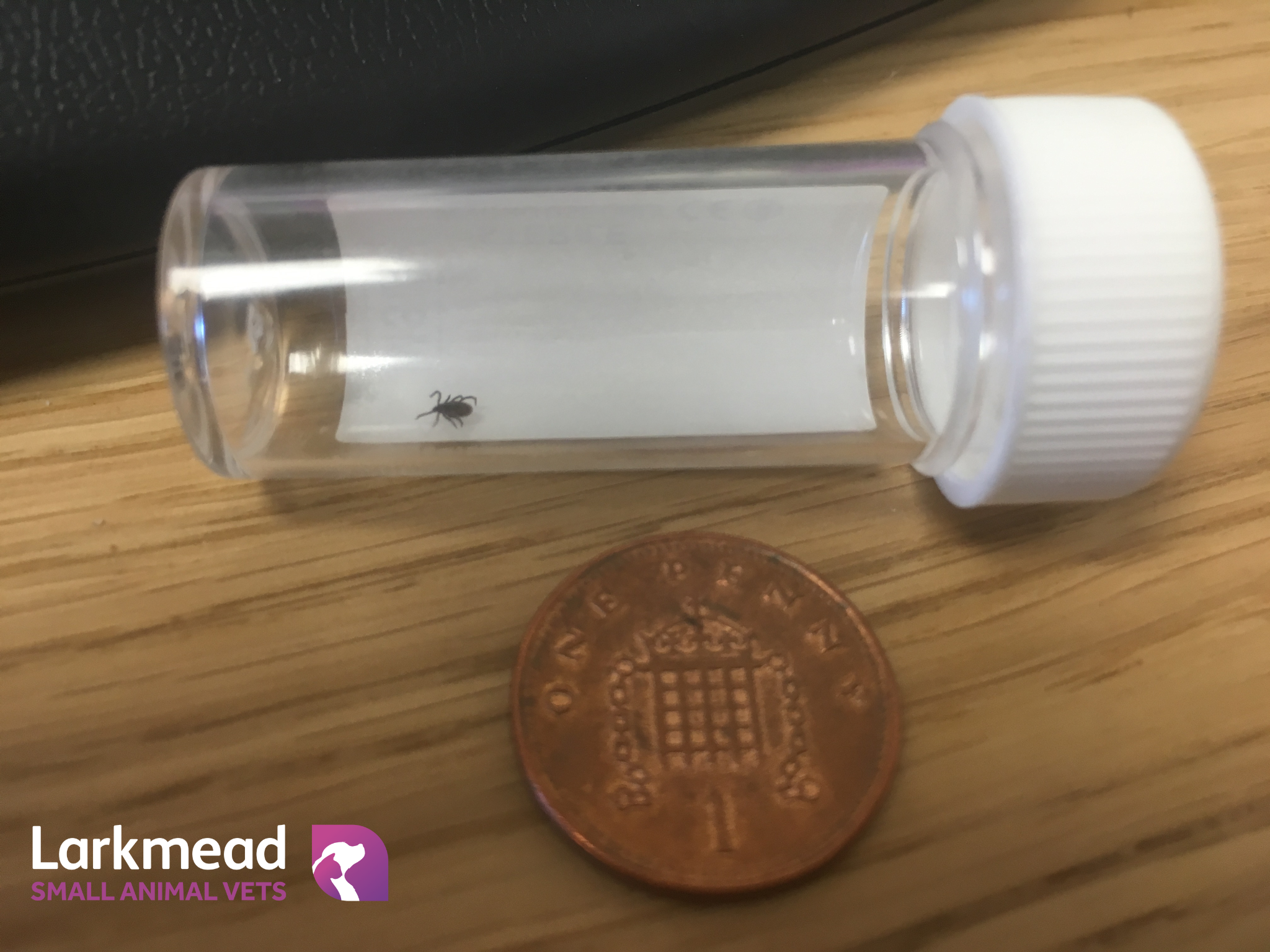
Did you know there are over 800 types of ticks? When the weather warms up, the ticks start to breed and feed, potentially putting you and your pet at risk.
Groom your pet regularly checking for any ticks, particularly after walking through long grass or areas where deer/sheep may have been. Check around the head, neck and ears which are common areas for ticks to attach, but as they can latch on anywhere on the body, a full check is recommended. And most importantly, ensure your pet has adequate protection – this prevents the ticks from latching on and kills the tick once it begins to feed.
Ticks change colour when they have fed – they are usually red/brown when unfed and dark grey when fed and can be mistaken for a small blood blister type lump.
Tick bites can be uncomfortable for your pet, especially if they are not removed properly but worse, infections can develop, and many diseases like Lyme disease, Babesiosis, various tick-borne fevers, encephalitis and Anaplasma can all be contracted from feeding ticks, some of which can be life threatening.
Come and chat to us about the most appropriate type of protection for your pet – you can even spread the cost (along with lots of other member benefits) by joining our Lifetime Care Club!
If your pet does get a tick, don’t panic but ensure it is removed promptly and correctly. Vet Liz shows us how here. You can always bring your pet in to see one of our nurses if you need help.
The CMA and the Veterinary Industry

Did anyone hear Vet Tim (our Managing Partner) recently on Radio Oxford? You can listen here: https://www.bbc.co.uk/sounds/play/p0hcswcs (he’s at 0722am).
The subject (and you may have seen reports in the press) was a review the CMA (Competition and Markets Authority) are conducting on the pricing of veterinary services.
We, as an independent practice, welcome this review. We strive to offer our clients clarity on pricing (and as such publish our routine pricing on our website and although we regularly provide estimates, we encourage our clients to ask if they would like clarity. Many of our team hold certificates in advanced veterinary care and this allows us to perform many of the services often passed to more expensive referral centres, in-house.
As a proudly independent practice, we are owned by the veterinary partners who work within the business. This gives us complete control over how we operate with the on-the-ground view of our clients at the forefront of our decisions.
We are committed to remaining independent, a practice where clients want to bring their pets, and to providing an excellent standard of care, including our own 24-hour emergency service.
Collecting Urine Samples

At some time during your pet’s lifetime, we may need to check a urine sample to help us diagnose a problem. When that time comes it is useful to know a few things to understand why we do this and how to make the process slightly easier.
How useful are urine samples?
We often look at urine samples at the same time as checking blood profiles. Together they are essential for staging and monitoring the progression of problems such as kidney disease. We can also get important information from urine samples on their own for other medical problems such as diabetes, haemolytic anaemia, bacterial cystitis, urinary crystals and Cushing’s disease to name a few.
A urine sample can be a good place to start an investigation particularly if you think your pet is doing either of the following:
- Showing signs of cystitis (inflammation of the bladder, which can be very uncomfortable) signs include urinating more frequently or struggling to urinate. Sometimes you may notice a change in smell of the urine or see blood or pink tinges in their urine.
- Drinking more than usual: this may indicate diabetes, infection or kidney disease for example.
Assessing a urine sample is a relatively stress-free way of beginning a work-up. It can tell us a lot about what may be going on and what we do next. It is also a very good thing to monitor when checking the progress of certain treatments.
There are two types of urine sample that we may consider using:
- A free catch sample (collected when the animal urinates). In dogs (male and female) it can be caught directly in a CLEAN sample pot or jam jar (we also have special urinary collection pots that come with a small funnel – please ask your vet or at reception if you would like one of these). In cats we recommend collecting it via a litter tray using non-absorbent cat litter (such as Katkor which can be purchased from us or pet shops). ADVANTAGES: can be done at home in a relaxed environment DISADVANTAGES: Some contamination inevitable, incorrect storage or delay in processing may affect accuracy of results.
- Cystocentesis (urine taken via needle and syringe directly from your pet’s bladder)
ADVANTAGES: A ‘clean’ sample with no contaminants from the environment. This can be collected directly from your pet when they visit the surgery and processed without delay for accurate results.
DISADVANTAGES: Requires a full bladder at the time of collection. Some patients not keen on having it done.
What should I do with a home caught urine sample to get the best results?
- Make sure your litter tray/collection pot is as clean as possible. Cat litter trays should be rinsed with warm soapy water and dried. Sterile sample pots are available free from the practice or use a well washed jam jar or leak proof plastic pot.
- Aim to collect the sample as close to the time you plan to deliver it to the surgery as you can – first urination of the day is best if possible as it is most concentrated and can therefore give us the most information.
- If there is a delay between collection and delivery store your sample in the fridge, samples should be delivered to the practice within 24 hours of being collected.
- Label the sample with your pet’s name and surname, date and time of collection. When you deliver it to us, please let us know why you have collected the sample, plus any symptoms/changes you have noticed.
Usually, preliminary results will be available to you within 24-48 hours of collection as we have our own lab machines at the practice. If samples are being sent away to an external laboratory for tests that cannot be done with us (ie. bacterial culture and sensitivity testing), results will take slightly longer. Please ask your vet for clarification.
Tis the Season to be Careful . . .

As we embrace the festive season, it’s essential to ensure that our furry friends enjoy a safe and joyful Christmas too. At Larkmead, we want to keep you informed about potential hazards that can affect your pets.
1. Festive Decorations: Deck the Halls with Care
The allure of shiny ornaments, twinkling lights, and fragrant greenery can be irresistible to pets. However, these festive decorations can pose various risks:
- Decorations: Glass ornaments, tinsel, and small decorations can be choking hazards or cause intestinal blockages if ingested. Opt for pet-friendly decorations and place delicate items out of your pet’s reach.
- Christmas Trees: Secure your tree to prevent it from toppling over. Pine needles, if ingested, can be harmful to your pet’s digestive system. Regularly sweep up fallen needles and discourage your pet from drinking water from the tree stand.
- Lights and Cords: Pets may be tempted to chew on electrical cords, leading to electric shocks or burns. Keep cords out of reach or use protective covers. Supervise pets around festive lights to prevent accidental entanglements.
2. Seasonal Foods: Share Safely
While indulging in holiday feasts, be cautious about sharing table scraps with your pets. Some common festive foods can be harmful:
- Chocolate: A holiday favourite, but it contains theobromine, which is toxic to pets. Keep chocolate treats well out of reach.
- Sweets: Often contain Xylitol (a sugar substitute) which is toxic to pets – keep well out of your pet’s reach.
- Christmas Cake/Mince Pies: Contain currants and raisins which whilst we don’t conclusively know what is toxic to cats and dogs in grapes (in any form – including raisins), we do know that sometimes digesting just one can be fatal and cause kidney failure. For this reason, our first course of action is to remove the toxin – the quicker we can make your pet sick, the better.
- Fatty Foods: Rich holiday dishes can lead to pancreatitis in pets. Avoid sharing fatty meats, gravy, and other high-fat foods. Onion and garlic (often present in stuffing and gravy) causes damage to red blood cells and should be avoided, even in small quantities.
- Bones: Poultry bones can splinter and cause serious injuries. Keep bones and other leftovers securely disposed of.
3. Gift Wrapping and Packaging: Hidden Dangers
The excitement of unwrapping presents can be contagious, but the materials can pose risks to curious pets:
- Ribbons and Bows: Cats especially are drawn to these items, which can cause choking or intestinal blockages if ingested. Keep gift-wrapping supplies away from pets.
- Plastic and Packaging Materials: Discard packaging promptly, as plastic, Styrofoam, and other materials can be hazardous if chewed or swallowed.
4. Noisy Celebrations: Mind the Volume
Fireworks, loud music, and enthusiastic celebrations can be distressing to pets. Create a safe and quiet space for them to retreat to if the festivities become overwhelming – never force your pet to participate or dress them up if they clearly feel uncomfortable.
By taking these precautions, you can ensure that the holiday season remains a time of joy and festivities for both you and your pets. If you suspect your pet has ingested something harmful or is experiencing distress, don’t hesitate to contact us on 01235 814991 – we’re here 24/7.
The importance of muzzle training

We all know that as lovely as our dogs are at home where they feel secure, they can behave differently in stressful situations. And for many dogs, visiting the vets can be high on that list!
At Larkmead we offer Confidence Clinics with our nurses to help reduce your dog’s stress when visiting and we welcome owners to pop in if they are passing and just sit for a few minutes, chat to the team or use the weighing scales – all of this helps dogs to learn that visiting the vets isn’t always scary.
That being said, for some dogs the fear never wears off and it can easily turn into aggression during stressful situations (including those who dislike meeting other dogs).
For these owners and of course, those who own an XL Bully (or other similarly built dog), getting your dog used to wearing a muzzle in a relaxed way is a good idea, should one be needed.
On Tuesday 31 October 2023, the Government announced that the American Bully XL type dog has been added to the banned breeds list in England and Wales. To an owner who has an XL bully or any other similarly built dog as a pet, this is a major concern (please note that vets are not involved with enforcement of this law or defining the breed). As part of the requirements to fulfil the criteria outlined in the legislation, these dogs are required to wear a muzzle each time they are taken for a walk; and that alone is an upsetting prospect for some owners. Larkmead Vets aim to support their clients with dogs affected by this new legislation, to reduce stress and make the transition as simple as possible.
It is very important that the muzzle your dog will wear, becomes as familiar as using a lead. Putting it on should become a routine, stress free process before going out for a walk or into public spaces, including visiting the vets. To help with this, some dogs need to be trained to wear a muzzle.
Successful muzzle training takes time and patience, so it really helps to start as soon as you can. Muzzle training should be carried out at home or in a space where your dog is relaxed and feels safe. It evolves from being happy around the muzzle, to becoming comfortable wearing the muzzle without pawing at it to get it off.
For advice and a video on muzzle training please visit the Blue Cross website where you will find some very useful information.
The Dog’s Trust also offer a range of muzzle training options, including free muzzle training webinars providing information about the most suitable types of muzzle; how to ensure a good fit and how to teach your dog to enjoy wearing their muzzle.
If you need further support, please do not hesitate to book a video consultation to chat with one of our vets.
Fleas

Finding a flea on your pet is horrible – but knowing the lifecycle of the flea can help you get rid of them, and also explain why you can sometimes see them on pets regularly treated with anti-parasitic medication.
Fleas only jump onto the pet to feed – the rest of their lifecycle is in the environment. Most flea products work when the flea feeds and will either kill the flea before it can lay eggs or stop any eggs laid reaching adulthood – whilst this is an invaluable tool in the fight against them, it is not the only response needed when you do see an adult flea on your pet.
Flea pupae can take up to 2 months (in ideal conditions) to develop into adult fleas so it can be normal to see adult fleas appearing on a correctly treated pet for 2-3 months after initial treatment.
So what should you do when you discover fleas?
1) Reduce levels of fleas in the home environment:
Wash all pet bedding weekly at a minimum of 50 degrees Celsius.
Invest in a good quality household flea spray but BEFORE you use it: increase humidity and vibrations (this will trigger pupal stage of flea life cycle to hatch) – this can be done by hanging up wet towels to dry overnight and vacuuming carpets thoroughly before spraying.
2) Ensure all household pets are treated with veterinary strength anti-parasitic medication and follow the dosage instructions provided carefully.
We also recommend that any pets found with live fleas are treated for tapeworm. Fleas can carry a bacteria (Bartonella) which is transmissible to humans causing ‘Cat scratch disease’ AND can carry tapeworm eggs. If any human members of the household start to feel unwell, it is recommended to see your doctor and mention flea infestation.
You may need to repeat all of these steps to ensure that all eggs are eradicated.
The recent unseasonable humid weather we experienced will have been an ideal breeding ground for fleas so remain vigilant and unfortunately with central heating, the danger never really goes away!
Is your pup ready for fireworks season?

Is this your pup’s first firework season? Are you concerned about how they might react?
Now is the time to act to get them ready – it is important that from an early age, as much as possible is done to help your pet associate loud noises with pleasant experiences such as their favourite game, chew toy or activity. These activities should be presented to your pet every time there are noisy events regardless of whether they seem stressed or not. Sound desensitisation is a key part of training your dog to accept unpleasant noises and not to be fearful. This approach to behaviour modification can be very rewarding but does require time and effort to achieve success so it is important to start early.
- There are online resources freely available from the Dogs Trust that can be played on your phone or TV – start quietly whilst your pet is relaxed or playing a game and then gradually build up the noise level – keep doing this regularly until your pet barely looks when the loud noises are played.
- Don’t react to any loud noises yourself – your pet will look to you to see how you react so carrying on as normal will give them the best positive response.
- Don’t try to comfort your pet, unless they come to you. Seeking them out to provide comfort just re-enforces the idea that the noise is something to fear.
- Often fearful pets will have a favourite place to retreat to. Ensure that they have access to this place and maybe provide some blankets or toys that smell familiar to support them.
- Make sure your garden and house is secure – scared pets can sometimes run and none of us like the thought of a scared pup running around!
- Make sure your pet’s microchip information is up to date, just in case.
Finally, if you know your pet finds these noises stressful and distressing, please book a video appointment to talk to one of our vets for further advice as there are things we can provide to help.
Changes to Prescribing Guidelines from 1st of September 2023

From 1st September 2023 some new guidance from the RCVS (Royal College of Veterinary Surgeons – our governing body) comes into effect. It is important that you understand how these changes may affect you.
Key changes:
Vets will no longer always need to carry out a physical examination to take an animal ‘under their care’ and prescribe prescription only veterinary medicines (POM-Vs). The examination may take place virtually (via video or telephone consultation) rather than in person.
EXCEPTIONS to this are if:
- a notifiable disease is suspected
- antibiotics are required
- controlled drugs e.g. phenobarbitone are required (unless in exceptional circumstances)
- anti-parasitics (flea and worm treatments), antivirals, antifungals are required
NB: If the vet is unable to safely and accurately select the correct medication required on the basis of a virtual consultation then you will be invited to attend the practice.
How does this affect you?
1) A prescription for flea and worm treatment will be available for your pets for 12 months from the date of the consultation when the treatment is prescribed. Should you wish to change this treatment during the 12 month period, a repeat physical examination will be required. Please note, we may not dispense 12 months worth of treatment but you will be able to request more as needed over the following 12 months via our repeat prescription service.
We recommend always ordering your flea and worming treatments in advance via our website to ensure a vet is available to dispense them. We may not be able to dispense in branch without prior notice.
2) You will be able to use our video consulting service to obtain medication for minor conditions without seeing the vet in practice. Prescribing will be at the vet’s discretion based on the condition being treated. Antibiotics, antivirals, antifungals, anti-parasitics, and controlled drugs CANNOT be obtained via this route.
3) A physical consultation (usually every 3 months) will be required to obtain controlled drugs such as phenobarbitone.
Repeat medications can be ordered in advance via our website.
Heart Scans at Larkmead

The heart is one of the most vital organs in the body. However, cardiac problems can be quite common in pets and can significantly impact their overall wellbeing.
Fortunately, advances in veterinary medicine have paved the way for early detection and effective management of heart conditions and here at Larkmead, we are able to offer many investigations in-house without the need for expensive referrals.
Heart disease can manifest in various forms such as heart murmurs, congestive heart failure and arrhythmias (abnormal heart beat). Detecting these conditions at an early stage allows us to implement appropriate treatments before the condition worsens. Routine check-ups can identify some signs, but they may not be sufficient to detect underlying heart problems. This is where heart scans, also known as echocardiograms or cardiac ultrasounds, play a pivotal role.
Echocardiography is a non-invasive and painless imaging technique used to examine the heart’s structure and function and can sometimes be performed without the need for a general anaesthetic. By using sound waves to create detailed images of the heart, we can assess the heart’s size, shape, and ability to pump blood effectively. Echocardiograms enable early detection of heart diseases, making them a valuable tool in ensuring our pets lead healthy lives.
At Larkmead we invested in a vivid IQ ultrasound scanner which allows us to get much clearer pictures of hearts and abdomens than a regular ultrasound machine.
If your vet suspects any cardiac abnormalities during a routine check-up, they may suggest a heart scan to get a clearer picture of your pet’s heart health.
Routine heart scans are recommended for certain breeds that are predisposed to cardiac issues, such as Boxers, Cavalier King Charles Spaniels, and Maine Coon cats and they can also be recommended for older pets or those displaying symptoms of heart problems such as:
- Coughing, especially at night or after exercise.
- Breathing difficulties or rapid, shallow breathing.
- Fatigue and reduced stamina.
- Fainting or collapsing.
- Cyanosis (bluish tint to the gums or tongue).
- Persistent loss of appetite and weight loss.
- Abdominal distension due to fluid retention.
The primary advantage of heart scans is that they allow us to diagnose heart diseases in their early stages, increasing the chances of successful treatment and improved prognosis. With timely intervention, the progression of heart conditions can be slowed down or even halted, helping your pet enjoy a better quality of life for longer.
If you are concerned about your pet’s heart, please let us know as soon as possible so that investigations can be started.
FIP – What is it and should I be worried?

Some of you may have seen the recent media reports regarding a significant outbreak in Cyprus of FIP (Feline Infectious Peritonitis) caused by a type of coronavirus. It is important to understand that this Coronavirus is different from the one causing COVID and has therefore not been identified as a risk to humans.
How could my cat develop FIP?
Feline coronavirus is spread via faeces. FIP occurs due to the spontaneous mutation of a very common variant of coronavirus that is thought to affect up to 40% of household cats without causing any problems. In multi-cat households or colonies this number increases closer to 100%. It is thought that factors such as high cat density and stress, together with a change in an individual’s immune response can trigger the change in the coronavirus to one that causes FIP. The disease is mostly seen in cats under 2 years of age, with the majority affected being between 4 and 12 months old.
What are the signs of FIP?
In many cats, signs may develop over a period of weeks to months. They may start with a fluctuating fever, lethargy and inappetence, progressing to breathing difficulties and a swollen fluid filled abdomen in some cases. Confirmation of the disease can be difficult as there is no single reliable test for FIP. Putting the clinical findings, age and typical changes on haematology together with PCR confirmation will however, give us a likely diagnosis.
What is the prognosis if my cat has FIP?
Unfortunately, many cases of FIP have historically proven to be fatal. Since 2021 however, there has been legal access in the UK to an antiviral agent that has shown to be effective in successfully treating some cases. The drawbacks of this medication however are its very high cost (up to £6000) and the need for medication to be given daily for a total of 84 days. Some variations of this protocol exist but the drawbacks are still similar.
How can I minimise the risk of FIP?
Try to source cats or kittens from small group environments. If you do have a multi-cat household (i.e. more than 4 cats) aim for a ratio of a maximum of 2 cats per litter tray. Keep the environment clean and freshen litter trays as soon as soiling is evident. Minimise stress.
Is the reported Cyprus outbreak a cause for concern?
From our knowledge of feline coronavirus, we know that FIP already occurs here in the UK. We also know that our feline population demonstrates a significantly different demographic here too. As yet, although there has been an increase in the number of cases of FIP reported in Cyprus between January to April 2023, there is no proven evidence to confirm why this is happening. Recommendations have been made to check coronavirus levels in all cats from Cyprus prior to entering the UK. This, together with the benefit of understanding of how FIP may arise, allows vets to monitor the situation and we can get a clearer idea of the risk to the UK cat population, if any.
If you have any concerns, please do not hesitate to contact us.