Let’s Talk about Blood Pressure

Hypertension or high blood pressure can affect many older cats without causing obvious clinical signs. Any cat over the age of 7 may be affected. It is more common in cats who suffer from a pre-existing condition such as kidney disease, hyperthyroidism or diabetes, however it also occurs on its own as a primary condition.
If your cat has untreated high blood pressure there may be damage to the eyes, heart, kidneys, brain and nervous system. This can appear as sudden onset blindness, seizures or breathing problems for example. Problems such as these are preventable with early detection and management.
Screening for hypertension is simple and painless and blood pressure measurements are taken using a cuff just like in humans. Owners are welcome to stay with their cats while they are having their check and can often help the vet or nurse by holding them comfortably. A minimum of three readings are usually taken to find an average. If your cat gets particularly stressed during travel, we can arrange for them to stay for a morning to settle down prior to checking.
If the blood pressure reading is found to be high, medication can be started immediately. This is readily accepted by most cats and stabilisation is often achieved in the first few weeks after beginning treatment. Further checks to rule out a cause for the hypertension will be discussed with you and regular follow-ups arranged to make sure your cat is responding well to treatment.
If you would like to book your cat in for a blood pressure check, you can book online (make sure you choose the appointment type ‘blood pressure check’) or give us a call.
We understand that many pets get anxious when coming to the vets so please mention it when booking if you think this applies to yours. We can provide useful tips and anxiety reducing medication if needed to help make their visit as relaxing as possible.
Spring Update

Spring has definitely sprung! The weather has warmed up and there are lambs and calves everywhere. The on-call weekends have been flat out and there hasn’t been much pause for breath during the working week either – the number of phone calls taken in the office has increased by around 50%! While it is our busiest time of year and you can end up extremely sleep deprived, it does tend to be the most fun. Calvings, lambings and caesareans are often a large part of why most farm animal vets choose the career. Whilst it can be a struggle to get on the road at 3am, the satisfaction on the drive home when you have had a successful outcome makes it worth it. As the livestock industry, rightly, moves evermore towards holistic approaches, herd/ flock health planning and preventative medicine, the emergency work has become less of a focus and the epic tales of lambings in the middle of a bog with just a match to see by are getting rarer. But this just makes those times where you do have the opportunity to do these operations all the more special. We have enjoyed this spring as a team, but it has been a challenging few weeks and we are looking forward to a bit of respite and the bank holiday – don’t worry there will be someone on the end of the phone if you need us!
As we move forward, the warmer weather does bring with it its own issues. Round worms are in the process of hatching currently, so stay ahead of the game with FWEC. Flies have also been an issue over the last few years, possibly due to increased numbers or maybe resistance to the fly products. Give us a call if you need support.
Sheep & Goats:
- We have seen a lot of hypomagnesaemia cases this spring, so make sure you have products in stock to treat cases promptly. Please give your vet a call to discuss if needed.
- Remember to start vaccinating lambs against clostridial disease at 4 weeks old. The initial course is two injections 4 weeks apart. Starting at 4 weeks old helps ensure that the course is completed and the lamb has a protective level of antibodies before the antibodies it acquired from colostrum have dropped to ineffective levels.
- Check for the Nematodirosis risk once your lambs are 4 weeks old by looking at the SCOPS Nematodirus forecast
- Start planning to prevent flystrike now. You can check the risk and see the first reported cases here: blow-fly tracker
Dairy Cattle
- For those herds that are looking to graze this summer (if the rain ever relents), it is important to include mastitis controls into your grazing plan. Speak to your vet for latest advice.
- Turnout is going to bring a new set of metabolic challenges as the lush grass will cause upset in calcium, phosphorus, and magnesium balance. We are seeing an unseasonably high number of grass staggers in sheep and suckler cows and the high calcium content of the grass may lead to milk fevers and disease related to low calcium. Make sure you chat to one of the vets to find out the best ways to protect your herd.
Pigs
- The cold nights and warm days seen recently has triggered some disease issues. These are mainly respiratory, but also some meningitis as well. If you are concerned with the health of your pigs, please get in touch. Don’t forget that we arrange collection of carcases for post mortem from the farm if necessary.
Beef Cattle
- It’s time to book in your bull’s MOTs prior to service window – give us a call to book.
- It is also a good time to pelvic measure heifers for selection.
Surgery at Larkmead

The Larkmead team is pretty unique in that we have a lot of skills in-house that other vets may need to refer patients to specialist vets for. This usually means better prices and of course the familiarity and care from the Team at Larkmead, particularly for post-op follow up care.
Several of our vets have undergone post-graduate training in specific disciplines and we are fortunate to have clinicians who are RCVS Advanced Practitioners in both surgery and medicine. This means we can offer treatment for more complicated cases than many other practices.
Comprehensive investigations and treatment are possible for a range of conditions including cardiology, dentistry, internal medicine, emergency and critical care, neurology, oncology, soft tissue and orthopaedic surgery.
In order to provide this service, we continuously re-invest in modern diagnostic aids such as ultrasound scanners, endoscopes, X-ray machines and laboratory equipment to give you accurate rapid results. At Didcot we also have a purpose-built Orthopaedic suite.
Should patients need to stay with us for any period, we have separate dog and cat hospitalisation facilities at both our Didcot Park Road and Cholsey branches. Our own vets and nurses provide 24-hour care for any patient admitted to the practice.
Booking your pet in for surgery can feel worrying but we are happy to answer any questions you may have and will explain what you will need to do before and after their procedure.
Should the vet recommend any procedure for your pet, please feel free to ask any questions (including an estimate of costs) – we want you to feel comfortable with what is going to happen and know that we are going to take good care of them whilst they are an in-patient with us.
The introduction of the Animal Health and Welfare Pathway

Last month, after much delay, DEFRA launched their new initiative in the form of the Animal Health and Welfare Pathway (AHWP). This will form a key part of the wider agricultural transition plan.
The goals for this incentive are based around 4 key pillars:
- Supporting farmers in transitioning to higher welfare practices and standards
- Improved biosecurity
- Tackling the increasing emergence of antimicrobial resistance
- Reducing greenhouse gas emissions from livestock
Initially, funding will be available to livestock keepers with >10 beef cows, >10 dairy cows, >20 sheep or >50 pigs who also have an SBI number. The plan is then to expand this to all livestock keepers and an increased number of species. Once enrolled (which can now be done online), farmers are able to arrange a visit with one of our vets to discuss endemic disease, animal productivity and how welfare can be improved. It is worth noting here that this is not an audit or inspection and it is also optional.
‘Why is this different to our normal health plan then?’ I hear you say. Well, in truth a lot of it is already covered in our current health plan and review. However, the two key differences are that (1) you will have to carry out certain tests dependent on species and (2) you will get paid for it!
The Testing
To be eligible to receive your funding you will have to perform set tests for your livestock. We will provide more details of this shortly. However, below are the diseases that must be tested for, dependent on species.
- Bovine Viral Diarrhoea (BVD) in beef cattle
- Bovine Viral Diarrhoea (BVD) in dairy cattle
- The effectiveness of worming treatments in sheep
- Porcine Reproductive and Respiratory Syndrome (PRRS) in pigs
The Funding
- £522 for a beef cattle review
- £372 for a dairy cattle review
- 436 for a sheep review
- £684 for a pig review
Unlike previous initiatives from DEFRA, you will receive this money directly and then pay the vet for the testing and health and welfare review. The review can be redone at a minimum interval of 10 months and must be completed within 6 months of acceptance (worth noting if you plan to perform tests at certain times of year). Currently, farmers can only claim for one species if they are mixed farmers. However, it is proposed that this will expand to allow payment for more than one species per farm.
We will provide more details as we go forward, although we can start carrying out reviews once you are signed up and enrolled. If you have further questions, please give us a call.
How we can help brachycephalic breed dogs

Brachycephalic or ‘flat-faced’ dogs are popular family pets that include Pugs, English Bulldogs and French Bulldogs. If you or someone you know owns a brachycephalic dog, you may have heard talk of Brachycephalic Obstructive Airway Syndrome (BOAS) which refers to the group of conditions resulting from breathing difficulties caused by the short nose and narrow airways of these breeds. Research suggests more than 40% of English bulldogs, 50% of French Bulldogs and 60% of Pugs would benefit from surgery to help treat BOAS and widen their airways.
Short noses mean that the soft tissue that usually sits comfortably inside a dog’s nose and mouth, has to fit into a much smaller space. This results in very narrow airways inside the nose and an over-long soft palate (the roof of the mouth) which can obstruct the back of their throat and causes snoring and snorting sounds commonly heard in these dogs. Other signs of BOAS include difficulty breathing during exercise, poor tolerance to heat, retching/vomiting and sleeping with a toy in their mouth or with their head propped up.
If left untreated, over time, the narrow airways and breathing difficulties can result in secondary respiratory, digestive and heart diseases which further worsens the BOAS. This why early intervention is key to minimising the effects of BOAS and stopping disease progression. Some dogs may only need lifestyle changes to manage their BOAS, such as keeping slim and avoiding hot weather. However more severely affected dogs may require surgery to widen their airways and improve their ability to breathe.
The most accurate way of knowing which dogs would benefit from treatment is by doing a non-invasive respiratory function assessment in which a vet listens to a dog’s breathing sounds before and after an exercise tolerance test. We recommend that all brachycephalic breed dogs have an assessment starting from one year old as if needed, airway surgery can greatly improve their quality of life. The cost of an assessment is the same as a standard veterinary consultation and are free to Lifetime Care Club Gold Members, with 20% off for LCC Kite Members.
Booking an Exercise Tolerance Test is very easy – please give our Reception Team a call. You should allow half an hour for your visit as you will be asked to complete a short-survey upon arrival as well as the 20 minute test itself. Appointments are available at Cholsey, Didcot Park Road or Great Western Park.
Our Video Consultation Service

Did you know that you can see one of our own vets from the comfort of your own home? We even have some evening appointments available at no additional cost to routine hours.
Here at Larkmead we are pleased to offer all clients the opportunity to use our video consulting service. Whilst this is not ideal for every appointment, it is very useful if a hands-on examination of your pet is not essential or in some situations, not possible. Examples of when the video service works well include all routine post-op checks (at days 2 and 10 after surgery), 6 month health checks in healthy pets and any queries when you’re not sure if your pet needs to see a vet or not. As with seeing a vet in the surgery, the video vet will have full access to your pet’s medical history plus any test results.
How does it work?
- Head for the Book A Video Consultation button.
- Choose the appointment that best suits your requirements (ie. consultation or pre/post op check)
- Consultations are free of charge for Lifetime Care Club Gold (LCC) Gold members and pre or post op checks. LCC Lark members receive a 15% discount and Kite members a 25% discount.
- Book your time slot – you can sometimes even find same day appointments available.
- Fill in your details and the reason for your appointment. Be careful to check your email address is correct.
- If your consultation is chargeable, you can pay online and confirm details
After booking you will receive a Zoom link via e-mail. On the day of your appointment make sure you have your pet with you and Zoom downloaded on your device. When you are ready just click on your Zoom link at your allocated appointment time. You will be ‘met’ in the call by one of our vets. If an in-house appointment is deemed necessary, this can be booked for you by the vet at no additional consultation cost.
PLEASE NOTE: Video appointments may not be used for emergencies or repeat prescription checks. If the vet decides that your pet requires prescription medication following the video appointment, then a follow-up consultation will be made at the surgery on your behalf.
We’ve received lots of positive feedback on this convenient service so why not give it a try the next time you need veterinary advice?
Our nurse clinics
Welcome to 2023 – we want to tell you a bit about things at Larkmead that you might not necessarily know we offer.
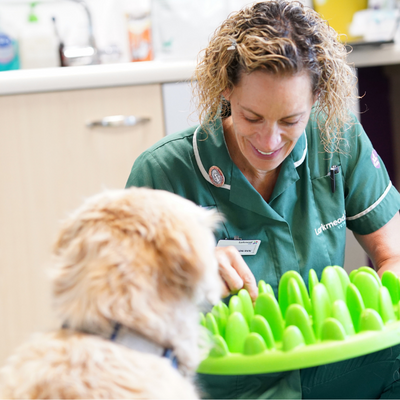
Our wonderful nursing team is an incredibly important part of our practice. Between them our nurses have years of experience, lovingly caring for our patients as well as their own pets. Did you know that as well as keeping things ticking over behind the scenes, they also run their own clinics and appointments?
Clinics are currently held at our Cholsey and Didcot branches with Great Western Park Clinics starting soon. Pre-bookable appointments are available Mondays to Fridays and include the following:
- Puppy and Kitten weigh and worm checks
- Tick removal
- Nail clipping
- Anal gland expressing
- Second and third injections of Librela, Solensia and Cytopoint (N.B. a vet appointment is required to review the patient at the first of every set of 3 appointments)
- Final post-op check appointments
As well as the above, our nurses also can support you and your pet with other problems that may need more time for a detailed examination of your pet and in-depth discussion. Our nurses will work with you to formulate a healthcare plan and can offer ongoing advice and support in conjunction with the vets where needed.
Examples of these clinics include:
Canine de-sensitisation and confidence clinics
These clinics are particularly helpful for dogs who exhibit anxiety when attending the practice or for those pets that have had bad experiences and who are worried about coming to see us. We use tailor made sessions to help your pet feel more comfortable with us and reassure them that coming to see us at the surgery is a fun and rewarding time.
Dental hygiene and care
Our nurses will assess your pet for signs of dental disease and can advise on management and long-term dental hygiene. These clinics are also useful for teaching teeth cleaning techniques and sharing tips on how to continue at home with your pet.
Weight management
These clinics are very popular for helping overweight pets. Our nursing team will cover all aspects of weight control techniques and advise you on the most successful weight loss food and program suited to your individual pet. Weight clinics are free to anyone choosing to purchase our recommended weight control diets from the practice and continue to be free during weight loss and successful long-term management of your pet.
Blood pressure measurement and monitoring
This is particularly important for all senior cats and some dogs too. Often signs of high blood pressure remain undetected until irreversible damage has occurred. Our nursing team will help with diagnosis and monitoring of our hypertensive patients.
As well as the clinics mentioned above, our nurses can help with many aspects of pet care that require an extra hand or further advice such as medication administration and grooming. Periodically we also run additional clinics and promotions focusing on Senior Healthcare and Mobility.
If you’d like to book to see one of our nurses, please speak to our Reception Team on 01235 814991/01491 651379.