May Newsletter

In this months’ newsletter:
- Vets Viewpoint from Claerwen
- Sheep & Goats: flystrike, clostridial disease, staggers, abortion, and BTV risk
- Dairy: Johnes disease update
- Cattle: Clostridial disease
- Pigs: temperature management
- Upcoming workshops
Read the May newsletter
Western Veterinary Acupuncture
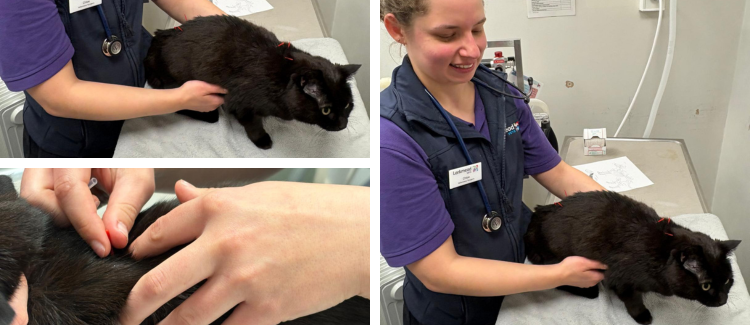
In recent years, Western veterinary acupuncture has gained momentum as a complementary treatment option for pets suffering from a range of conditions. While rooted in ancient Chinese medicine, the Western approach integrates this time-honoured practice with contemporary veterinary science—offering a holistic, evidence-based way to improve animal health and well-being.
We are very pleased to be able to offer this service at Larkmead, under the care of Vet Chloe.
What Is Western Veterinary Acupuncture?
Western veterinary acupuncture adapts traditional acupuncture principles to modern veterinary knowledge. It involves the insertion of fine, sterile needles into specific points on an animal’s body to stimulate nerves, increase blood flow, and trigger the release of natural pain-relieving chemicals like endorphins and serotonin.
Unlike Eastern philosophies that focus on energy flow or “Qi,” the Western model views acupuncture through the lens of neurology and physiology. This scientific perspective allows vets to incorporate acupuncture seamlessly into treatment plans alongside medications, surgery, or physical therapy.
What Conditions Can It Help?
Acupuncture can benefit a wide range of conditions, particularly those involving pain and inflammation. Common applications include:
- Arthritis and joint disease
- Back pain and spinal issues (e.g., intervertebral disc disease)
- Chronic gastrointestinal issues (like IBD or nausea)
- Neurological disorders, including seizures or nerve injuries
- Post-operative recovery and rehabilitation
- Anxiety and behavioural concerns
Acupuncture can also provide relief for pets that cannot tolerate certain medications or have not responded well to other treatments.
Why Consider Acupuncture?
- Non-invasive and low-risk: When performed by a certified veterinary acupuncturist, the procedure is very safe with minimal side effects.
- Pain management without medications: It’s especially valuable for senior pets or those with liver or kidney sensitivities.
- Improved quality of life: Many pet owners report noticeable improvements in mobility, mood, and energy levels after a series of treatments.
- Customisable care: Treatments can be tailored to each animal’s unique health needs and comfort level.
What to Expect
Acupuncture sessions typically last 15 minutes (with a longer first session for assessment). Most pets tolerate the needles very well—some even become so relaxed that they fall asleep during the session!
Is It Right for Your Pet?
If your pet suffers from chronic pain, mobility issues, or a stubborn condition that hasn’t responded to conventional treatment or that treatment seems to be less effective of late, Western veterinary acupuncture might offer a new path to relief. Some insurance companies offer cover (often as a complimentary therapy which can be a separate fee limit) so it may be worth checking your individual policy.
If you’d like to learn more about this new service, please checkout the further information here or give us a call.
April Newsletter
In this months’ newsletter:
- Vets Viewpoint from Adelle
- BTV Update
- Sheep & Goats: watery mouth disease, abortion rates, liver fluke, nematodirosis and BTV risk.
- Dairy: Fluid therapy for calves
- Cattle: Bluetongue update
- Pigs: Foot & mouth disease
- Upcoming workshops
Read the April newsletter
Preparing for fireworks – start now!
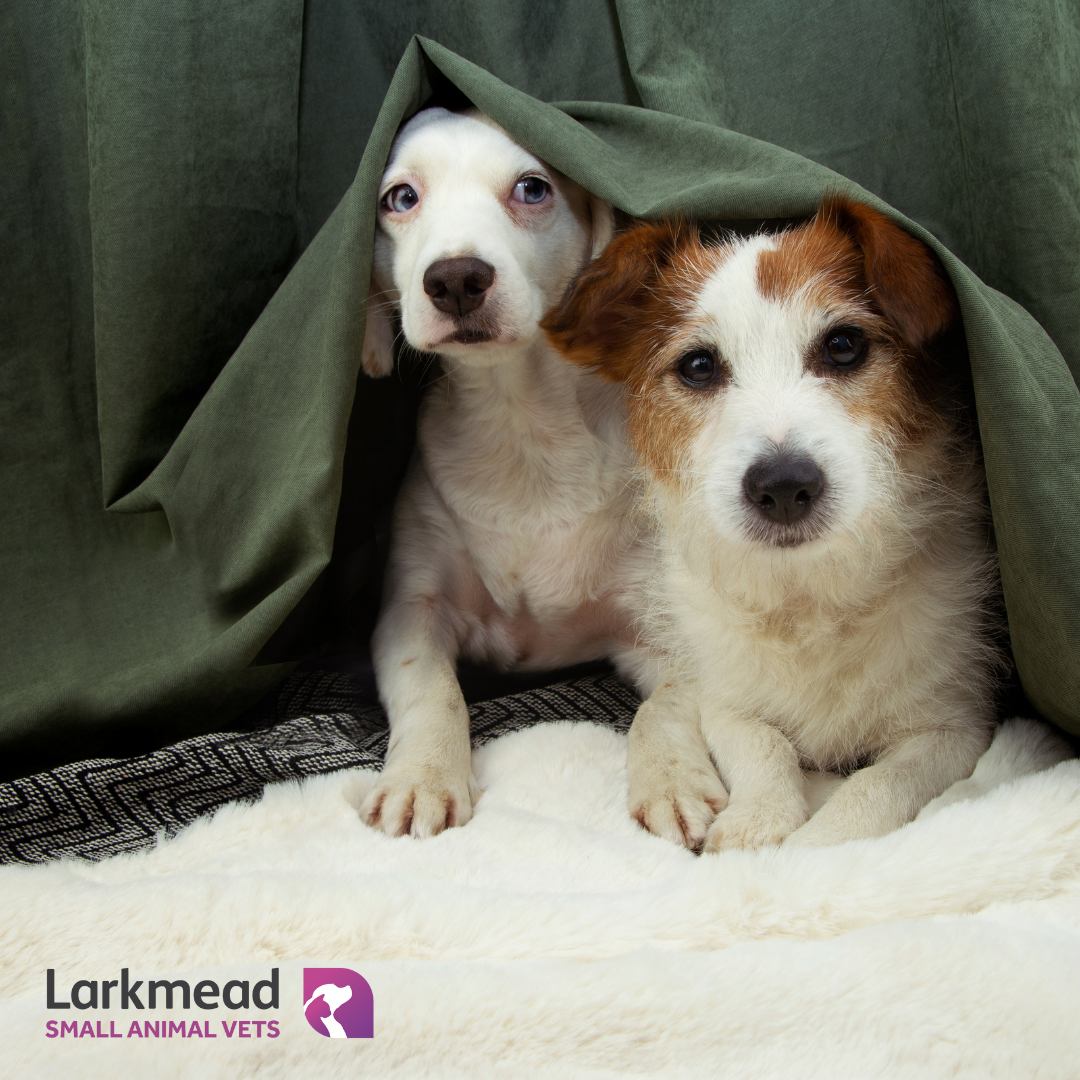
We know fireworks ‘season’ seems a long way off – and it is, but now is the best time to start desensitising your dog in readiness, particularly if they are young and this will be their first experience.
Fear of fireworks can start at any age (even in pets who may have taken no notice in previous years), you may be able to associate it with a particular trigger, for example you are out for your evening walk and fireworks start banging in the sky and your dog suddenly wants to rush home. But for some, we never really know what starts the fear association off.
There are lots of signs (not necessarily obvious) that your dog is finding the loud noises distressing:
- Whimpering, whining, barking, crying or growling
- Constantly seeking your attention
- Panting, drooling or lip-licking
- Hiding
- Visible shaking
- Restlessness and pacing
- Loss of appetite
Helping to desensitise them can be extremely beneficial – particularly when done at a young age. Here are our top tips:
- Take this process slowly – it is best done over a number of months and repeated regularly
- Visit the Dogs Trust website and play their Sounds Scary track – start with a very low volume
- Whilst it is playing in the background, provided your dog is not taking any notice, offer them their dinner or a treat
- Follow this up with their favourite indoor game
- Repeat this weekly – each week, gradually increase the volume you are playing the sounds at, until it’s very loud! By this point, your dog should be taking very little notice.
- If your dog becomes distressed or worried when playing the noises, turn them down again. Although it is ok to comfort your dog if they come to you, it is best not to seek them out – they will look to you for direction over worrying events and if you are carrying on making the dinner, chatting etc, they will understand there is no real danger.
If you need any help, please book a video consult with one of our veterinary team or come in to see one of our nurses at their clinics as we are keen to support your pets and have other options available if desensitisation does not work.
March Newsletter
In this months’ newsletter:
- Vets Viewpoint from Izzy
- Sheep & Goats: worming, abortion rates, and lambing. Goat disbudding survey link.
- Bluetongue Update – reminder to book pre-movement tests in advance
- Dairy: Red Tractor rule changes
- Cattle: AHWP funding veterinary visits
- Upcoming workshops
- Pigs: Tb in pigs
- Veterinary Attestations expiring soon
Read the March newsletter
Scam Warning

We have received numerous reports of scammers operating in the local area, claiming to be Larkmead Vets. They are asking people for small payments over the phone to update a pet’s microchip details, to release a lost pet or start an urgently needed operation. Please note that we will never ask you for money over the phone for these types of things – if our Team do call you, it will come up as one of our main numbers on caller ID (01235 814991 or 01491 651379) and you are welcome to call us back independently to confirm if you are not sure. Always find the number for the business you are trying to call independently; do not use the number anyone may give you on one of these calls and ensure the phone has been disconnected properly from the previous call, or call us from a different phone.
If your pet is sadly missing, it is worth visiting
https://www.petsreunited.com/help/faq and following the guidance rather than advertising your personal number online (there is a small charge for their number protection service). You can contact your microchip company yourself to make sure your contact details are up-to-date and register your pet as missing – most pets are reunited using this data. If you are not sure which chip company you are registered with, entering the chip number at
https://www.check-a-chip.co.uk can tell you which company to contact.
February News
In this months’ newsletter:
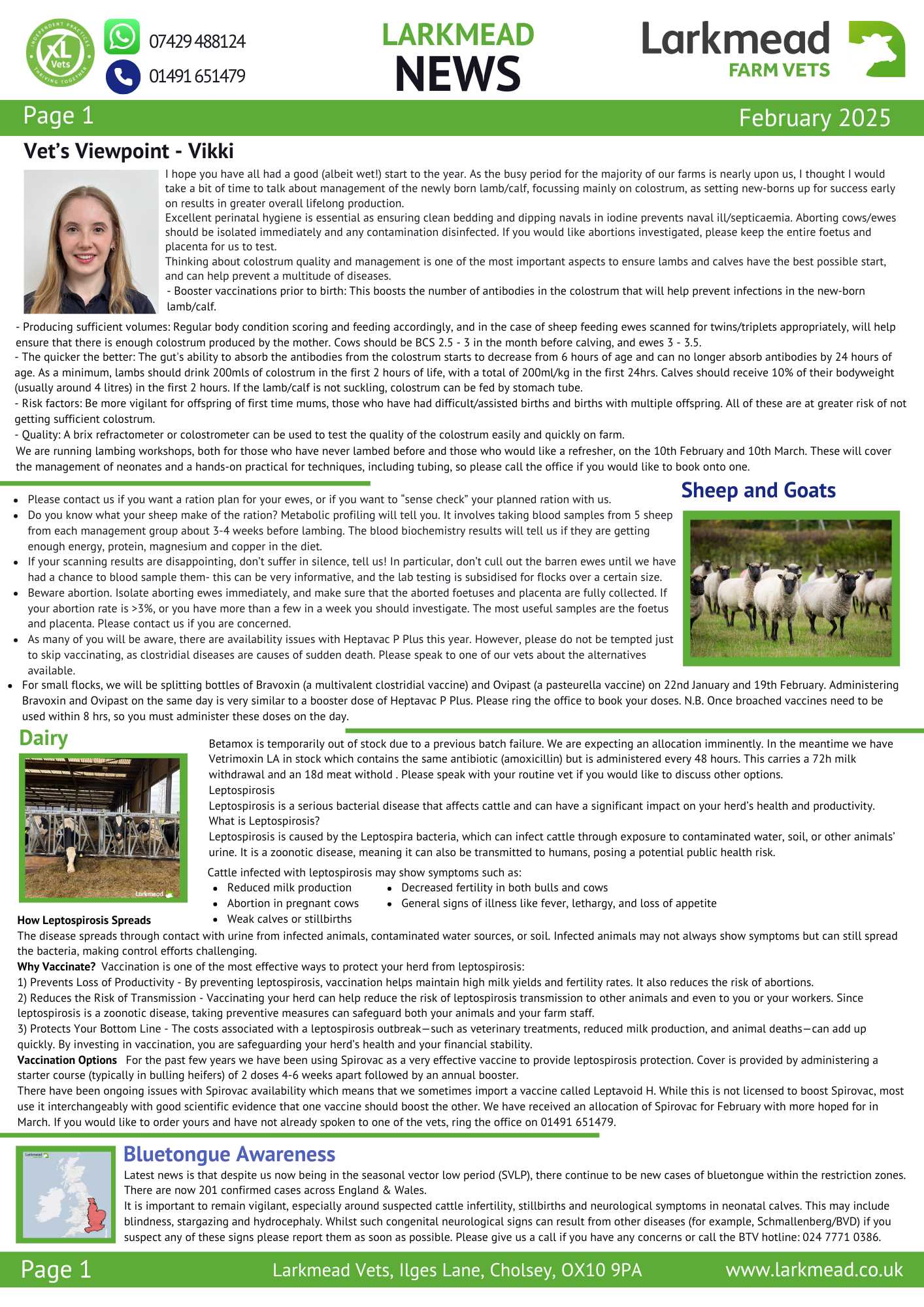
- Vets Viewpoint from Vikki
- Sheep & Goats: ration planning, scanning results and vaccine updates
- Bluetongue Update
- Dairy: Leptospirosis
- Cattle: Calving reminders
- Upcoming workshops
- Pigs: Early piglet care
- Veterinary Attestations expiring soon
Read the February newsletter
Reducing Anxiety at the Vets
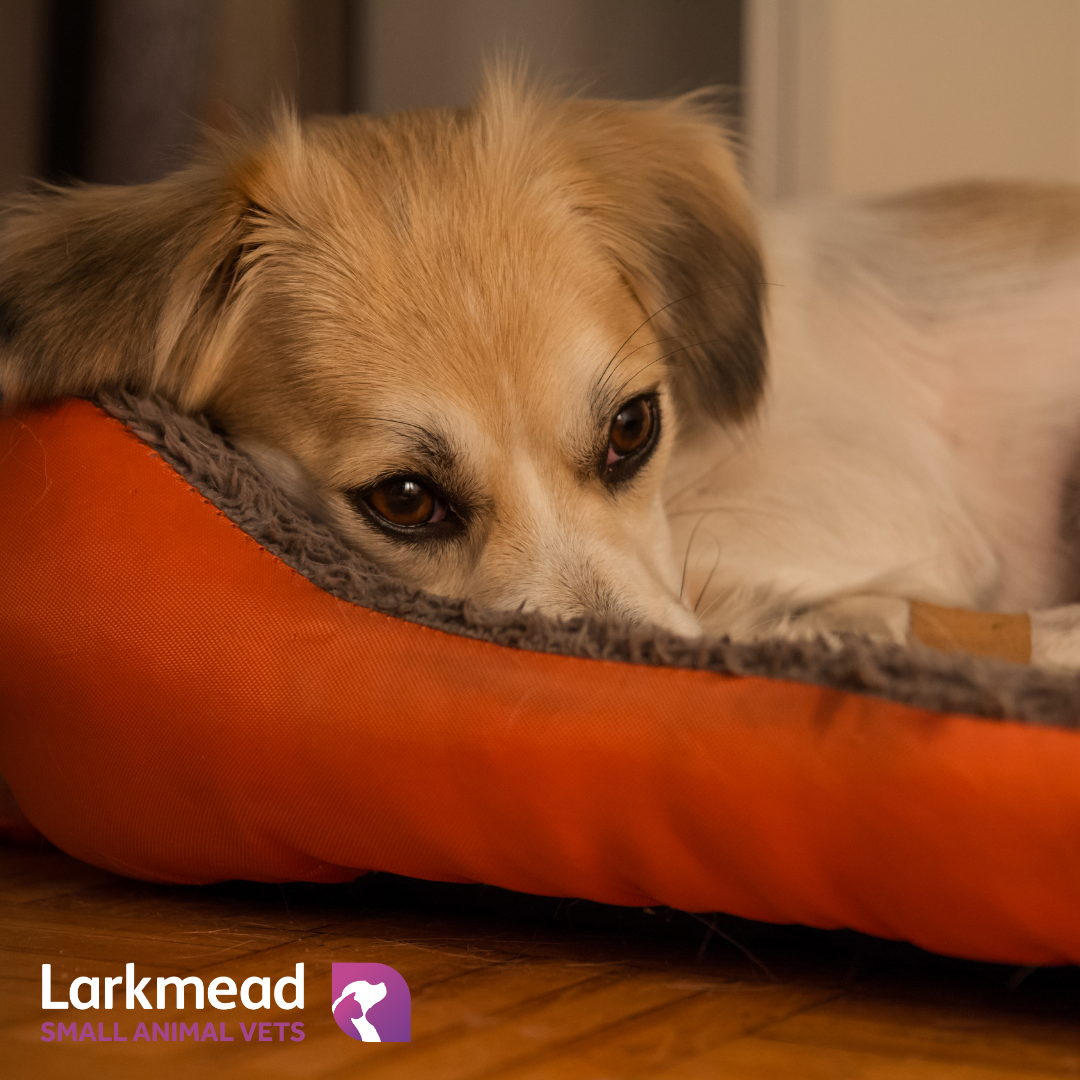
Both dogs and cats will experience veterinary related anxiety at some point during their lives. It is almost impossible to avoid; when you think about it, a trip to the vets often ends up with either a stranger touching them all over, a injection, or a thermometer placed where they’d rather not let anyone go! All of these things can emit feelings of fear, anxiety and stress in your pet.
Whilst we can’t control every aspect of their anxiety, we can help to reduce it. Below are some simple steps we can take to make their visit to the vets a lot easier.
But before we talk about easing anxiety, lets go through some of the common signs of stress that we see on a daily basis in the veterinary practice.
Dogs 🐕
There are a variety of behaviours dogs will produce when they feel threatened in any way. Some are quite subtle whilst others are very obvious to most of us.
Some of the signs we might immediately recognise as fear and anxiety at the vets include:
- Panting
- Pacing or pulling to get out the door
- Growling and or barking
- Snapping and or biting
- Shaking
- Toileting inside
- Whale Eye (showing the whites of their eyes)
Some signs of anxiety we often misinterpret as other things include:
- Lip-licking and hypersalivating – whilst this can mean that they are hungry, a lot of the time when they are visiting the vets it is also an indicator of anxiety.
- Yawning – this is very different to a relaxed, tired yawn. It is a lot tighter and happens multiple times as a self-soothing behaviour.
- Front paw lift – again, we often misread this as a dog wanting to shake hands with us! But in the veterinary practice, it is often a sign that a dog feels nervous of its surroundings.
- Stretching and Scratching – these are more self-soothing behaviours a dog will partake in when nervous, the same way we fiddle with our clothes, skin or hands when we are nervous!
- Belly roll – this is another behaviour that is often miscommunicated to us by dogs when they offer it to us. In most cases at the veterinary practice, dogs will show their bellies as a way of showing us they are not a threat and asking us politely to please not hurt them. In this situation, it is important for us to take a step back to let the dog know we have understood.
- Frantic energy/excitement – in many cases, dogs can fly through the veterinary doors seemingly happy and full of beans! And often they are. However, it can also mean that a dog is hyper-aroused, offering little space in their tank left to cope with the vet appointment.
So, how can we help our dogs when they visit us at the vets?
- A calm and normal morning routine. Dogs need to sleep up to 16-18 hours per day. If we keep their routine normal on the day of a vet appointment, it avoids any extra stress. This also includes positive, fun emotions – for example, taking your dog for a long walk to tire them out before a vet appointment can often have the opposite effect and lower their ability to cope with the vet examining them, because they are too overstimulated.
- Classical or Reggae music. Playing calm and soothing music has been scientifically proven to reduce stress levels in our canine patients. This could be played at home, or in the car on the way to your appointment.
- Waiting outside. You do not have to utilise the waiting area. A lot of the time, anxiety is an anticipatory fear of the vets based on a reinforced history of a stressful time when they’ve visited us. If your dog finds it easier to wait in the car or walk around outside until the vet can see you, this can be accommodated – just make sure our team are aware.
- Providing food and enrichment. Bringing favourite toys and treats to your appointment can assist in promoting a calming experience. As long as the item does not cause too much over-stimulation, having a ‘comfort blanket’ can often make our canine patients feel a little more soothed. This can be in the form of a ball, a stuffed toy, a blanket, a food toy – or their favourite snack!
- Training. Asking our dogs for focus in the waiting area can be challenging for a lot of them but for some, it can be a lifeline. Giving certain dogs (depending on breed and temperament) direction can help desensitise them to the veterinary environment and, in turn, allow them to tolerate their visits better. Training like this can include what we call cooperative care, which is a type of training method used in Zoos! If we can teach a dog what is expected of them during a veterinary appointment, and give them an element of control, it reduces the need for restraint and sedatives.
- Anti-anxiety medications. These medications need to be discussed and administered before your visit but if we feel your dog would benefit from them, this is absolutely something we can accommodate – you can discuss this with a vet using our video consultation service.
- Confidence Clinics. These clinics involve a mixture of fun and training to help make the vet experience easier for our canine patients and included in our Gold Lifetime Care Club membership.

Cats 🐈
Cats have a fundamental need to be in control, or at least to be seen as if they are. Their first port of call will often be to simply avoid something that makes them nervous, and this can prove challenging when they visit us.
Here are some examples of cat behaviour that let us know they aren’t too happy:
- Hiding (in their box or under towels or tables)
- Swishing or fluffy tail
- Flat ears or rotated backwards
- Open mouth breathing
- Arched back
- Crouched down
- Vocalising (yowling or growling)
- Hissing, spitting and biting
- Swiping
- Stress purr (different from a relaxed purr, the stress purr is a self-soothing behaviour)
So, how can we help our cats when they visit us at the vets?
- Where possible, have their carrier out and ready at least 24 hours before their appointment. In emergency situations this isn’t always an option but for routine appointments, having the carrier out in advance makes it less of a threat.
- Blanket in their carrier for them to hide under. Allowing them to avoid their worry over the vets as much as possible gives them some of that control they love so much! It is also beneficial to have a carrier that helps to keep them hidden but the top half can still be removed, taking away the need to coax them out of a front door.
- Towel or blanket over their carrier at all times. This helps reduce scary noises and visual triggers as much as possible.
- If possible, holding the carrier from the bottom rather than from the handle. This makes the journey much more stabilised for our feline patients.
- Location in the car. Some cats prefer to be more hidden – in the footwell behind the passenger seat is a good option for this. Alternatively, if your cat prefers being up-high (away from danger), they may prefer the passenger seat of the car (try to use the seatbelt to secure the carrier).
- Pheromone spray. These sprays can help promote an idea of calmness.
- Anti-anxiety medication. These medications would be discussed with a vet before your visit to us but if we feel as if your cat would benefit from them, this is absolutely something we can discuss and may be able prescribe via video consultation.
- Having a separate blanket to place them onto the veterinary table, or to hide their heads under whilst they are being examined. Again, another way we can give them some agency when dealing with a veterinary appointment.
Ultimately, if your pet is overly anxious about coming to the vets, please talk to us and we can do our best to make accommodations for them.
January News

In this months’ newsletter:
- Vets Viewpoint from Izzy
- Sheep & Goats: body condition scoring in mid pregnancy, ration planning, scanning results and vaccine updates
- Bluetongue Update
- Cattle: New calf scour vaccine
- Upcoming workshops
- Pigs: changes in Red Tractor standards
- Veterinary Attestations expiring soon
Read the January newsletter
Festive Hazards
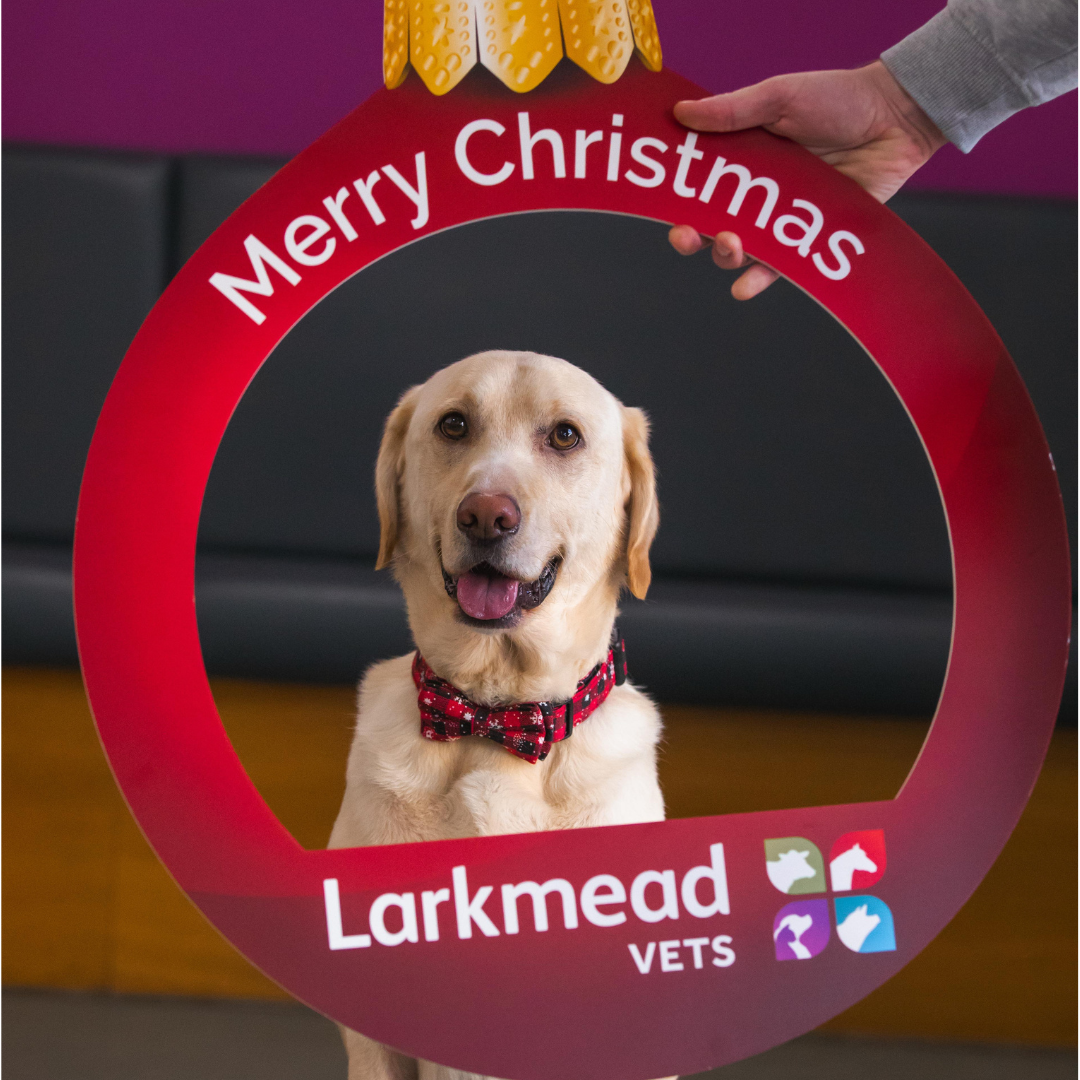
The festive season is wonderful to enjoy time with our pets but we want to ensure you get to do so safely and avoid unnecessary visits to see us!
Festive Foods
- Toxic Treats: Chocolate, grapes, raisins, onions, garlic, and anything containing xylitol (a common sugar substitute) can be dangerous for pets.
- Fatty Foods: Rich foods like turkey skin, gravy, and stuffing can upset your pet’s stomach or even lead to pancreatitis.
- Bones: Cooked bones can splinter and cause choking or digestive issues.
Stick to pet-safe foods like plain meat and veggies instead, ideally a small amount mixed with your pet’s usual food will make them very happy!
Hazards
- Christmas Trees: Secure your tree to prevent tipping, and ensure tinsel is out of reach as it can be harmful if ingested. Keep fragile ornaments and electrical cords safe.
- Plants: Mistletoe, holly, and poinsettias are festive but toxic to pets.
- Candles: Curious paws and wagging tails can easily knock over candles, so never leave them unattended
Managing Stress
A house full of guests can be overwhelming for some pets. To reduce their stress:
- Create a Safe Space: Provide a quiet, comfortable area where your pet can retreat to if they feel overwhelmed.
- Stick to Their Routine: Try to maintain their regular feeding, walking, and playtime schedule.
- Festive Outfits: Only dress up your pet if you are confident that they are enjoying the experience. Ensure they don’t get too hot if wearing a jumper and fur coat in your centrally heated house!
- Watch for Signs of Stress: Excessive barking, hiding, or changes in appetite could indicate your pet is feeling anxious. Ensure children are supervised and know to leave pet’s alone when these signs are seen.